West Bengal 
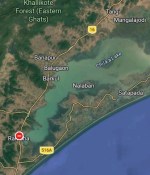
From Dry Delta to Chilika Lagoon: 28,000 Years of Climate History
(0)Asia’s largest brackish water lagoon and the second-largest coastal lagoon in the world, Chilika is designated as a Ramsar site. Researchers at IIT Kharagpur are piecing together the evolution of the location over 2800 years. Sanghamitra reports recent research.
First Year of Aditya-L1: SUIT Sheds Light on the Sun
Aditya-L1, India’s first solar observatory, was launched about 3 years ago and it has settled down in its intended orbit. This technological feat has started yielding scientific dividends. Sanghamitra reports research output from one of the four remote sensing units onboard Aditya-L1.

West Bengal rice landraces: markers for genetic diversity
The traditional rice landraces in West Bengal are under threat due to the new high-yielding varieties. The traditional rice varieties are better at surviving under climatic and other abiotic stresses. To save the gene pool for the future, we need to distinguish the genetic markers. Gayathri reports recent research.

Deep learning algorithms to predict cyclone severity
Cyclones are not just gusts of wind and rain. They destroy life and property. We need improvements in our prediction of cyclones, to distinguish severe cyclones, very severe cyclones and super cyclones before they happen. Indian researchers have taken one more step towards this. Sanghamitra reports recent research.

Bullet Chilli Seeds
Decades of irrigated cultivation of crops is turning agricultural lands more saline. So search is on for salt tolerant varieties. Recently, researchers from West Bengal explored the extent of salt tolerance of seeds’ germination and growth in a salt tolerant variety of chilli. Samikhya Bhuyan reports.
Microplastics in Ballast Water: saving the seas
To stabilise ships in oceans, water is pumped in or out of the ballast depending on the other loads on the ship. If the water being pumped out is filtered ships can save the oceans from the emerging microplastic pollution, say Indian scientists.
Speech Signals: biomarkers for heart failure
Madhu Keerthana from IIT Kharagpur and collaborators from Finland have come up with an automated system to identify heart problems from speech signals of patients. A medical technology in the making.
The Wettest Place on Earth: Rainfall Shifts in the North-East
While examining the rainfall data from the North-East, Indian meteorologists discover that the wettest place on the earth has shifted from Cherrapunji to Mawsynram. What could be the reason? Read on.
Circular RNAs as Colorectal Cancer Biomarkers
Rajabrata Bhuyan from the Banasthali Vidyapith and Angshuman Bagchi from the University of Kalyani have identified circular non-coding RNAs involved in colorectal cancers. This type of RNAs may one day become a part of cancer diagnostics and perhaps will even play a role in therapeutics.
Gamma Irradiation to Enhance Jasmine Fragrance
Breeding better varieties using conventional seed selection is not possible in jasmine, propagated vegitatively. So researchers in IIT Kharagpur used gamma irradiation on jasmine cuttings to induce mutations that enhance the fragrance of jasmine. Read on for details.

