The macula, a small area in the centre of your retina, can start degenerating with age. Macular degeneration leads to gradual vision loss as you age. Everyday tasks like reading, recognising faces, or even walking become challenging.
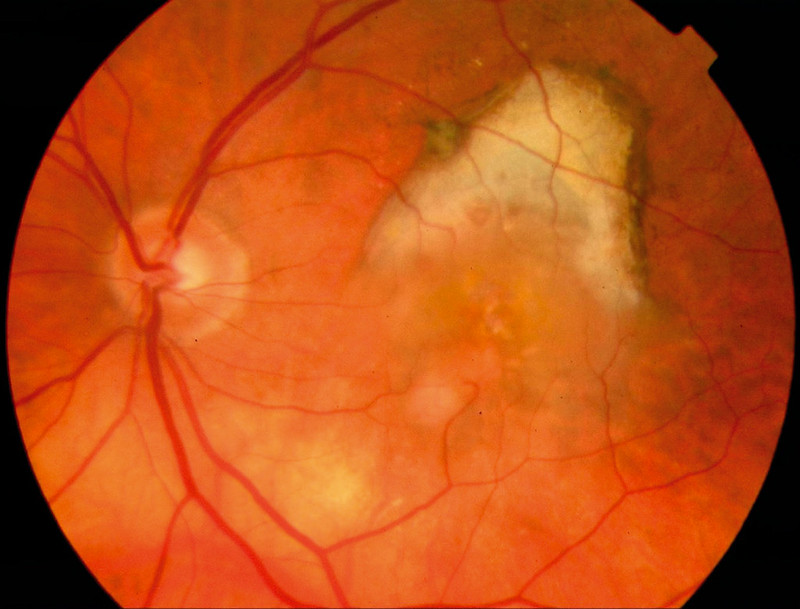
Image: Richard Leung via Flickr
Since existing treatments cannot always restore lost eyesight, structured low vision rehabilitation is the only way to help elderly patients maximise their remaining vision.
To evaluate this strategy, researchers at the Dr. D. Y. Patil Medical College, Hospital and Research Centre, Pune launched a customised clinical program.
They recruited elderly participants with chronic central vision damage. Over a one-year period, the clinical team provided each person with a customised kit tailored to their specific daily goals.
Based on individual needs, the participants received optical tools such as high-power reading spectacles, dome magnifiers, stand magnifiers and handheld telescopes. The elderly participants also received non-optical tools such as high-intensity lamps, reading stands, tactile markers, and large‐print reading materials. For individuals with more advanced damage, the team provided portable video magnifiers with customizable contrast and magnification settings.
The participants were trained to use the tools and to look slightly sideways to use their undamaged peripheral vision.
After six months, the researchers evaluated their strategy. Of the eighty-four participants enrolled in the study, seventy-eight completed the follow up. Relatively younger and educated individuals had the highest compliance. Older participants tended to use optical tools while the relatively younger ones preferred electronic tools. Over eighty-five per cent of the patients chose to keep using their assistive tools regularly. There were no problems with the devices.
Proper lighting conditions improved the ability to see fine contrasts. Many participants combined high-power glasses with digital magnifiers.
Clinical measurements showed major gains in visual tracking performance and reading efficiency. Average reading pace was accelerated by nearly nineteen words per minute. Most importantly, participants reported increased personal independence.
The results suggest that the provision of relevant tools and structured rehabilitation for low vision improve independent living, reading speeds, and the daily quality of life for elderly individuals suffering from macular degeneration.
Annals of African Medicine 25:1400-4 (2026);
DOI: 10.4103/aam.aam_329_25
Reported by Sri Manjari
BRIC-CDFD, Hyderabad


Leave a Reply