West Bengal is the richest reservoir of rice biodiversity in India. The emerging demand for high yielding rice varieties is, however, threatening the cultivation of the native rice types of West Bengal. The farmers there still grow traditional rice in areas, but only where the high-yielding varieties fail to thrive.
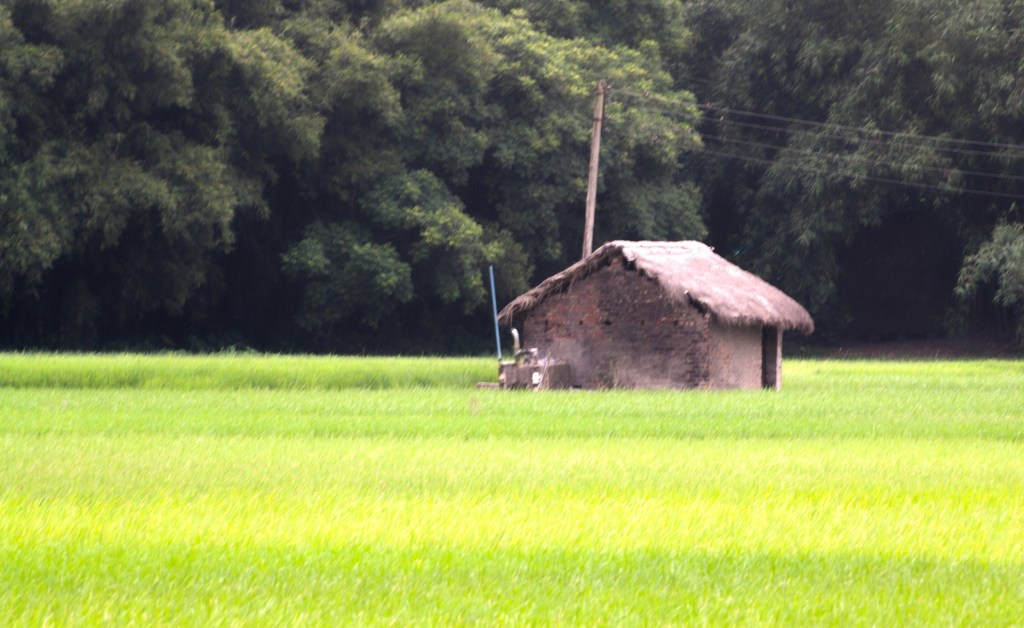
Image: Indrajit Das via Wikimedia Commons
Even though the traditional rice varieties have low yield, they survive harsh conditions, adjust to a changing climate, and keep a wide gene pool alive. Understanding the genetic differences can help us select useful traits for future breeding programs.
How can we recognise useful traits in the landraces of West Bengal?
Recently, researchers from the Rice Biotechnology Laboratory, Visva-Bharati, West Bengal and the International Crops Research Institute for the Semi-Arid Tropics, Telangana investigated eight rice genotypes.
From the genotypes, they collected leaf samples: from the drought-prone districts of Bankura and Purulia, the dry upland genotypes, Gorah and Rupsail, from Bankura district, Gobindabhog and Sitabhog, traditional lowland genotypes known for their aroma and for moderate drought tolerance, and from Bidhan Chandra Krishi Viswavidyalaya, Nadia, the lowland indigenous genotypes with moderate drought tolerance, Latisail and Malliksail.
For comparison, from Canning, South 24 Parganas, the researchers collected samples from the wild species, Oryza rufipogon, and a more distant relative, Porteresia coarctata, known for tolerance to high salinity and submergence in estuarine conditions.
From the leaf tissue of five-day-old germinating rice seedlings of all the samples, they isolated DNA. And confirmed the quality of the DNA using agarose gel electrophoresis and spectrophotometry.
Earlier studies have confirmed that, to study differences in the genetic makeup of rice varieties, simple sequence repeats as DNA markers are reliable. So the researchers focused on six simple sequence repeats at chromosome one, known to be linked to environmental stress tolerance in rice.
They copied and amplified these DNA markers using polymerase chain reaction. Using electrophoresis, the sequences were separated based on size, and documented with the help of a gel. Twenty-two unique alleles with zero identical bands were amplified. The results suggested 100% genetic difference across the eight rice varieties.
The researchers identified the simple sequence repeat marker, RM 1287, as the most diverse: it had six distinct alleles across the eight tested rice genotypes. They calculated the polymorphism information content for each simple sequence repeat marker using standard genetic diversity formulae. The calculation identified RM 8094 as the most informative marker and RM 3412 as the least informative.
To convert the qualitative biological data into quantitative digital format, the researchers used a binary scoring matrix, scoring a distinct physical band on the gel as 1 and its absence as 0. To calculate the exact proportion of stress tolerance-related genetic material shared between individual rice lines, the researchers used statistical software. The calculation showed zero similarity between the lowland cultivar, Latisail, and the traditional aromatic varieties, Sitabhog and Gobindabhog. The highest similarity was found between the dry upland variety, Gorah, and the wild ancestor, Oryza rufipogon.
To classify the eight rice varieties based on the genetic structure of their stress tolerance loci, the researchers generated a dendrogram. The cluster analysis grouped the eight rice genotypes into two major, distinct genetic families. Cluster I contained the drought-tolerant upland variety, Gorah, the wild ancestor, Oryza rufipogon, and the aromatic rice varieties, Gobindabhog and Seetabhog. Cluster II had the traditional lowland landraces, Rupsail, Malliksail, and Latisail, together with the salt-tolerant wild grass relative, Porteresia coarctata. The wild species shared the exact same genetic clusters as local cultivated landraces. The researchers also found that cultivated local landraces share conserved ancient DNA segments with their wild counterparts on chromosome 1.
The six simple sequence repeat markers were highly effective for identifying and distinguishing between the different rice landraces from West Bengal.
Traditional West Bengal rice lines are invaluable genetic reservoirs that can serve as donors to breed modern, climate-resilient rice crops. Conserving these local, traditional rice communities is vital for long term global food security. There is a need to ensure that farming communities keep a diverse and resilient gene pool that can withstand ongoing climatic fluctuations, protecting the livelihoods of marginal farmers.
Plant Science Today 13(3): 1-6 (2026)
DOI: 10.14719/pst.14154
Reported by S. Gayathri
PhD scholar, SASTRA Deemed to be University, Thanjavur
This report was written in a workshop for capacity building of PhD scholars
organised by scienceandmediaworkshops.
The reports on this site are free-to-use for Indian media houses.
STEAMindiaReports: flavorsome and nourishing science news you can use.


Leave a Reply