Millets, recognised for their role in climate-resilient agriculture, are increasingly promoted in India for their nutritional value. These climate-resilient crops offer an opportunity to diversify farming especially through agroforestry, a practice in which agricultural crops are grown alongside trees.
However, competition for sunlight, water and nutrients between trees and crops can influence the growth of the trees and the yield of the crop.
Casuarina junghuhniana, a fast-growing tree cultivated for timber and other wood products, does not have broad leaves that block the sunlight from reaching the millet crops. Can we integrate casuarina plantations with millet cultivation?
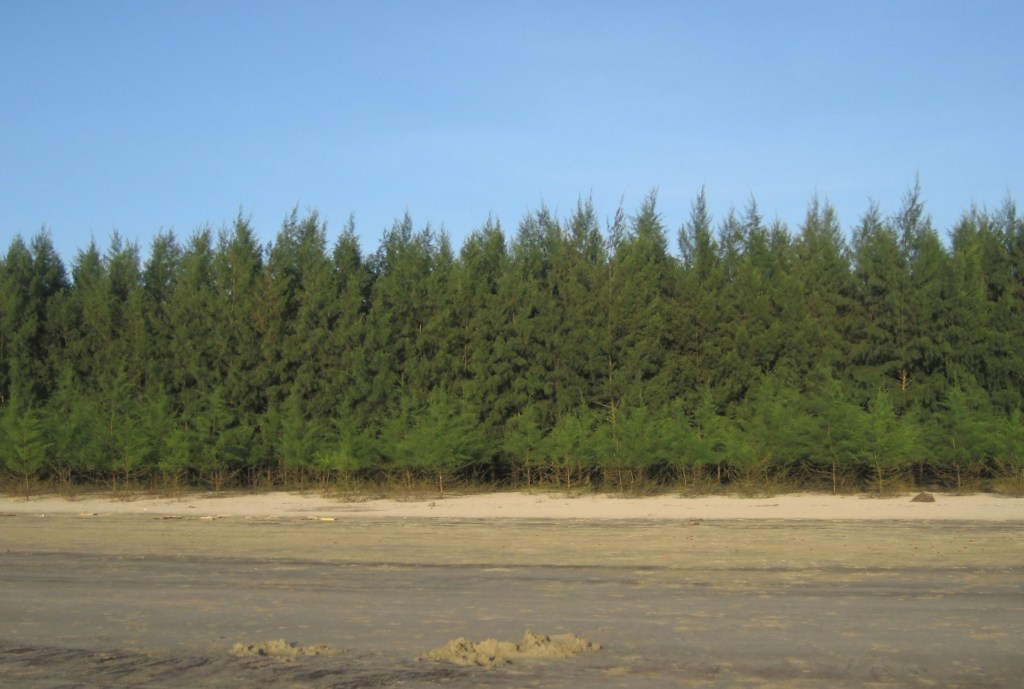
Image: Azim Al Jabber via Wikimedia Commons
But which millet varieties perform best when grown alongside Casuarina junghuhniana?
How does this kind of millet intercropping influence soil fertility?
Researchers from the Forest College and Research Institute, Mettupalayam collaborated with researchers in the Agricultural College, Thiruvannamalai, Horticulture College and Research Institute, Periyakulum, and Horticulture College and Research Institute, Coimbatore, to address these questions.
The researchers conducted an 18-month field study at the Forest College and Research Institute, Coimbatore. They first collected composite baseline soil samples from a depth of up to 30 centimeters and tested the samples to establish a baseline of soil fertility. Then they planted Casuarina junghuhniana saplings with at least two metres separation to ensure uniform sunlight exposure.
The team selected six species for their experiments: kodo, foxtail, finger, barnyard, little, and proso millets. After planting the casuarina trees, they sowed the millets between the tree rows across three consecutive six-month crop cycles. The researchers also maintained sole-crop plots for each millet without trees, as well as a tree-alone control plot, under identical agronomic management.
One month after sowing, two months after sowing, and at harvest, they recorded millet plant height and root collar diameter. Plant height and root collar thickness across all millet species growing under the tree canopy reduced slightly compared to those growing in open, unshaded fields.
At each cycle’s harvest, the researchers measured dry matter production and grain yield for both intercropped and sole-cropped millets. Then they evaluated the system productivity relative to monoculture. Combining trees and millets produced over twice as much total output as growing either component alone, with all intercropped systems. Little millet consistently achieved the highest dry matter production and grain yield across all three harvest cycles relative to other species.
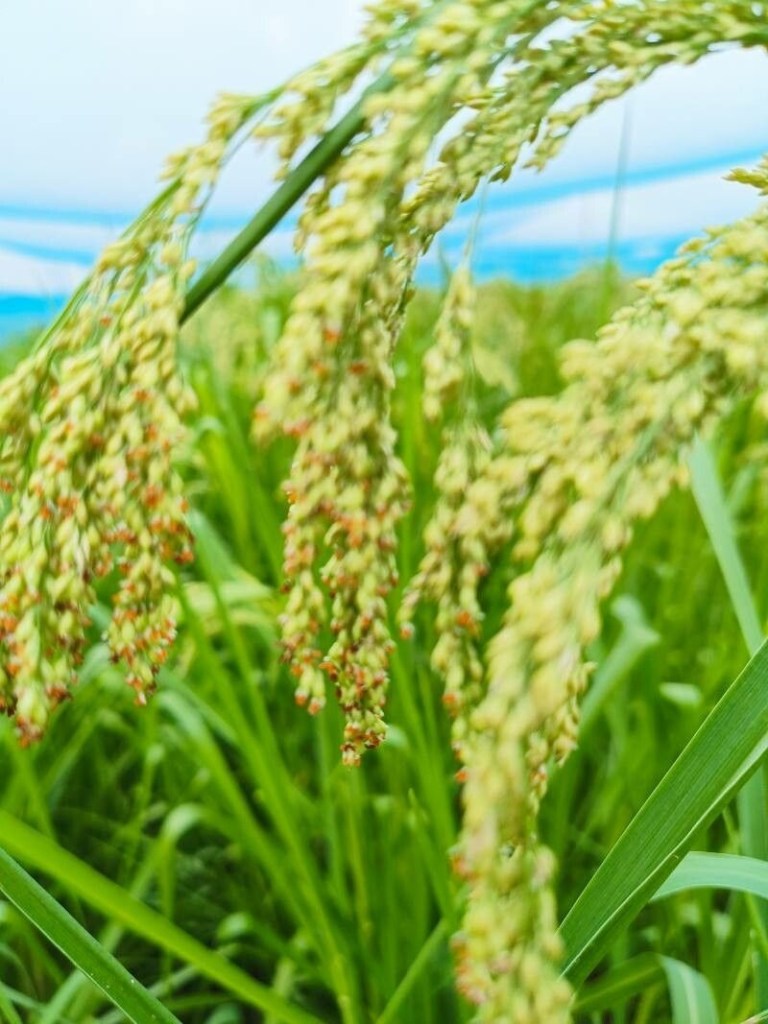
As the tree canopy expanded between 12 and 18 months, reduced sunlight penetration caused grain yields to decline across all intercropped millets compared to their earlier cycles. The yield reduction relative to sole cropping was lowest in little millet and highest in kodo millet, confirming kodo millet as the least compatible intercrop.
Little millet ranked first in overall performance – achieving the highest average grain yield, maximum total wood yield, and highest net income. The others in descending order of overall rank are barnyard millet, finger millet, foxtail millet, proso millet and kodo millet.
Image: Mani Vetriventhan viaPlantnet
The researchers also estimated tree stem volume and total wood production at 18 months using standard allometric equations and wood density values. Interestingly, every intercropped treatment produced significantly higher wood volume.
After the final crop harvest at 18 months, the researchers collected composite soil samples from a depth of up to 30 centimeters from every plot. They analyzed post-harvest soil to measure fertility changes against baseline levels.
The acidity level of the soil remained stable and near-neutral across all treatments, suggesting that 18 months of intensive intercropping caused no harmful soil acidification. In fact, soil organic carbon, nitrogen and phosphorus improved in all intercropped plots except in those with barnyard millet. Potassium also increased in intercropped plots except those with barnyard and proso millets.
Since most casuarina plantations are in degraded lands, intercropping with little millet may help reclaim soil fertility. Combining short-term food production with long-term timber cultivation can help farmers diversify their income while improving soil quality.
Forestry entrepreneurs and dryland agricultural managers are encouraged to test millet intercropping in agroforestry systems, taking into account the shade tolerance of different millet varieties and local growing conditions.
Plant Science Today 13 (sp5): 1-10 (2026);
DOI: 10.14719/pst.16225
Reported by Sanghamitra Deobhanj
Freelance science writer, Cuttack


Leave a Reply