State 
From which state of India does the paper originate?
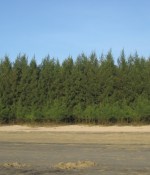
Cultivating millet crops between casuarina trees improves soil fertility
(0)Casuarina plantations are seen mostly in the degraded coastal areas of India as a monocrop. Growing millets as an intercrop can improve the soil fertility and the income from the plantations. Sanghamitra reports recent research

Age-related macular degeneration: strategies and tools to adapt
A small area in the centre of retina may start degenerating with age. This leads to slow loss of vision. The quality of life of the patients deteriorates. Researchers in Pune have come up with some simple solutions. Sri Manjari reports.
Cow’s vocalisation: Moo for motherhood
Hormonal changes during oestrous changes the frequencies in the vocalisation of cows. Researchers in Karnataka created an ensemble of artificial intelligence models to detect the reproductive readiness from vocalisation of cows. The ensemble model has more than 96 percent accuracy. A report on recent research.

From Dry Delta to Chilika Lagoon: 28,000 Years of Climate History
Asia’s largest brackish water lagoon and the second-largest coastal lagoon in the world, Chilika is designated as a Ramsar site. Researchers at IIT Kharagpur are piecing together the evolution of the location over 2800 years. Sanghamitra reports recent research.

Red cabbage extract as sensor to detect milk spoilage
Milk is a good medium for bacterial growth. With bacterial growth, the composition of milk changes. To detect milk spoilage long before we can detect it by smell or curdling, Indian researchers have created a paper strip sensor using red cabbage extract. Gita Madhu reports recent research.

Protecting Tomatoes: pest control and solar panels
Insect pests can reduce the tomato yield by 20 to 80 percent. Chemical pesticides are costly to not only the farmers but also to the environment. Recent research suggest that we can save the crop without harming the environment. Sri Manjari reports.
Women farmers in Jharkhand: managing grains after harvests
A large amount of grains get spoiled during storage. In Jharkhand, it is women of the farming household who take care of the grains after harvests. What are the limitations face by women? What can be done to reduce grain spoilage? Gita Madhu reports recent research.
Improving vitamin D content in mushrooms
Ergosterol in mushrooms is converted into vitamin D only when exposed to ultraviolet light.
Recently, researchers at Gandhi Krishi Vigyana Kendra, Bengaluru, optimised the use of ultraviolet light to maximise vitamin D content in pink oyster mushrooms. Gita Madhu reports:
Missing Cyclones in the North Indian Ocean
Why is it that cyclones in the North Indian Ocean form only in some years and not in the others? Scientists at IITM Pune have identified the parameters that will improve cyclone forecasting. Sanghamitra reports.
First Year of Aditya-L1: SUIT Sheds Light on the Sun
Aditya-L1, India’s first solar observatory, was launched about 3 years ago and it has settled down in its intended orbit. This technological feat has started yielding scientific dividends. Sanghamitra reports research output from one of the four remote sensing units onboard Aditya-L1.

