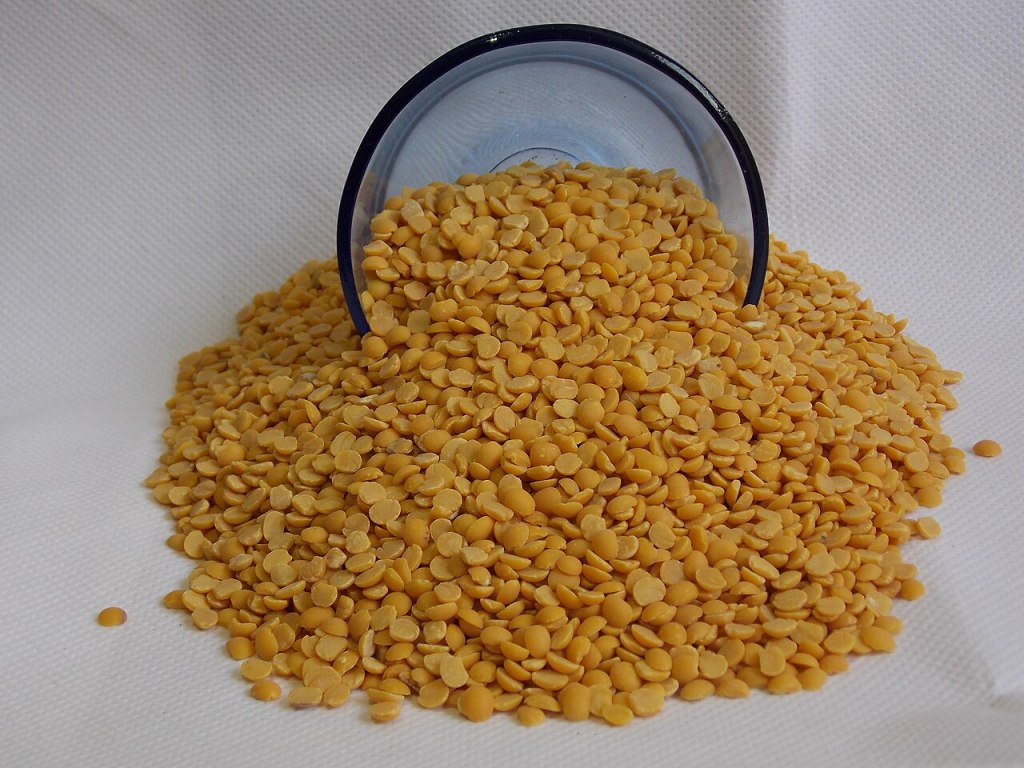
Pigeon pea, Cajanus cajan, has high protein content. Commonly called toor dal and arhar dal, it is a favourite in diets throughout India. So, many farmers in India grow toor dal and use its leaves as fodder for livestock. Its woody stems serve as fuel. India is now reported to be the largest producer of the dal in the world.
Image: Herbeater via Wikimedia Commons
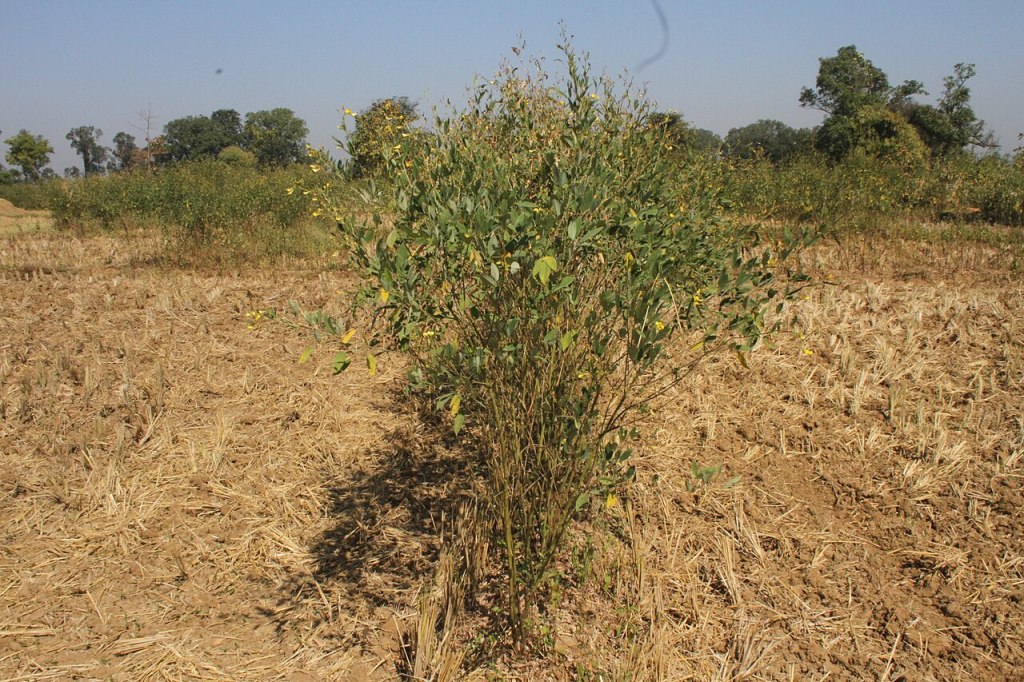
As a pulse crop, it is well suited to rainfed and dryland farming systems. Because of its deep roots and drought tolerance, it can withstand moisture stress better than other pulse crops. And the plant improves soil fertility by fixing nitrogen.
However, in drylands, the yield is low.
Image: Satish Awate via Wikimedia Commons
Seeking to overcome the challenge, researchers from the International Crops Research Institute for the Semi-Arid Tropics, Telangana collaborated with researchers in Odisha and New Delhi.
Pigeon pea is sowed at the onset of the monsoon. The timing of sowing is critical for the crop since the crop is primarily rainfed. But it is difficult to accurately predict the monsoon. The researchers reckoned that this problem could be overcome if the seedlings are grown in nurseries and transplanted in fields after the onset of the monsoon.
However, the crop might still fail due to other reasons, causing economic distress to the farmers. Intercropping pigeon pea with soybean could be a strategy to overcome this challenge.
To test their hunches, the researchers started their experiments just before the 2014 monsoon.
They sowed toor dal seeds in propagation trays filled with cocopeat. These trays have many small cells for seed germination, reducing the space required to raise seedlings. Two seeds each of three climate resilient varieties were sown in each cell.
To transplant the seedlings, the researchers prepared twenty-meter-long, six-meter-wide plots in the deep black soil of the research farm at Patancheru, Telangana. In control plots for planting only pigeon pea, they used the recommended amounts of fertilisers. In control plots for intercropping with soybean, they used only half the amount.
Approximately three weeks later, the seedlings were transplanted, with a row spacing of about one and a half metres and a little more than half a metre between plants in each row. To compare transplantation with direct sowing, a handheld tool was used to sow pigeon pea seeds in the control plots.
The team carried out a six-year study from 2014 to 2020. The results showed that pigeon pea yield with transplantation was nearly ten to eighteen percent more than in fields with direct sowing. Growing pigeon seedling in nurseries before the monsoon onset gives the crop a three-week head start. Transplanting also improved water productivity by nearly twenty percent.
The researchers recommend genotype ICPH2740 since it produced higher yields than the other two varieties of pigeon pea. The fields where the genotype ICPH2740 was grown also had a higher amount of soil organic carbon.
Comparing the pigeon pea crop with the pigeon pea intercropped with soybean is not easy. So the researchers used a formula to calculate the system equivalent yield to measure and compare crop performance. While sole pigeon pea cropping had higher pigeon pea yields, intercropping of pigeon pea and soybean showed up to around eighteen percent higher system equivalent yield, say the researchers.
Pigeon pea farmers in South Asia and the semi-arid tropics could try seedling transplanting as a climate adaptation strategy to survive unpredictable rainfall and delayed monsoons. The results of this research support the suitability of intercropping pigeon pea and soybean for integrated production systems in dryland environments, regions facing chronic low productivity and climate vulnerability. If the pigeon pea crop fails due to drought, disease, or price decline, the soybean crop can partially or even fully compensate for the time, effort and money put in by the farmers.
Pigeon pea intercropping with groundnuts as well as with maize has been reported earlier. There is a need to evaluate these intercropping strategies in the different climatic zones of India, not only for economic benefits, but also in terms of the contributions of these strategies to long term soil health.
Journal of Agriculture and Food Research 27:1-15 (2026);
DOI: 10.1016/j.jafr.2026.102820
Reported by Sanghamitra Deobhanj
Freelance science writer, Cuttack


Leave a Reply