Science 
Pure science with potential applications
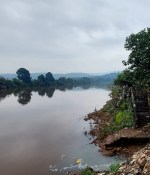
Monitoring Muggers at the River Savitri
(0)The mugger crocodile, Crocodylus palustris, is a protected species in India. While monitoring the growing population of mugger crocodiles living in the River Savitri, researchers discover interesting behavioural patterns distinct from other reptiles. Read this report for details.
Earthquakes impact the ionosphere
Earthquakes originate from the stresses that build up in the lithosphere. The electron count in the ionosphere, fifty of more kilometres above, respond to the lithospheric stresses and the sudden release of energy. Ravindra Yadav reports on recent research done in India.
Managing Burn Wounds: Mupirocin Oleogel
Oleogels, gels made from oils can be useful to deliver medicines for topical application. Deepika Baskaran reports recent research where mupirocin, an antibiotic, in castor oil was converted to an oleogel for treating burn wounds in a rat model. The burn wounds healed completely in 26 days.
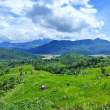
Nagaland’s Elephant Corridors: fragmentation and conflict
Researchers from Nagaland University and Mizoram University identified eleven elephant corridors in Nagaland, two of which are now compromised. Encroachment of the corridors trap the free-ranging elephants leading to human elephant conflict. Sanghamitra Deobhanj reports.
Gluten allergy: enzyme structure, function and activity
There are about fourteen million Indians who are affected by gluten allergy. The molecular mechanisms behind the problem are slowly being unravelled. Anuska Karmarkar reports recent Indian research on the structure, function and malfunctions of enzyme responsible for gluten allergy.
Matriliny and health in Meghalaya
In matrilineal communities, inheritance of property is through women. Women live in their maternal homes. Men who marry live in their wife’s home. How does all this translate into the health of women, their children and their husbands? Sanghamitra reports recent research.

Kangaroo mother care: ensuring survival for the newborn baby
Kangaroo mother care, a practice advised by the WHO, is low-cost and ensures the survival of newborns in resource-poor settings. How aware are healthcare providers in Indian hospitals about the actual practice? Researchers from Saint John’s Medical College, Bengaluru investigated. Gita Madhu reports.
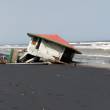
Cyclone severity: ozone intrusion into troposphere
Cyclones breach the tropopause and bring down ozone from the stratosphere and feed tropospheric air into the stratosphere. Indian researchers provide data to help us understand the role of gravity waves in mutual intrusions between the troposphere and the stratosphere. Sanghamitra reports recent research.
Wound healing: Bacterial cellulose and neem-hypericum oil
Wound dressings need to be changed and it is quite painful to the patient. Indian researchers tried a paste made of bacterial cellulose in a suspension of neem oil and hypericum oil in water. The wounds healed and closed fast when tested on rats. Deepika Baskaran reports recent research.
Red rice and white rice: nutritional differences
Seven different rice varieties from Himachal Pradesh. Some grow well in tropical climates; some flourish in temperate climates. Some are red and others are white. Which one provides better nutrition? Gayathri S reports a recent research collaboration between an ICAR institution and a private university.

