Uttar Pradesh 
Gluten allergy can lead to malnutrition in children
(0)The number of children under five who suffer from severe acute malnutrition in India is huge. But a large proportion of these children may not be suffering from lack of food. Gluten allergy can reduce absorption of nutrients even in well-fed children. Anuska Karmarkar reports recent research findings.
Earthquakes impact the ionosphere
Earthquakes originate from the stresses that build up in the lithosphere. The electron count in the ionosphere, fifty of more kilometres above, respond to the lithospheric stresses and the sudden release of energy. Ravindra Yadav reports on recent research done in India.
A heritage grain: location of cultivation matters
Kalanamak, a rice variety grown in Siddarthnagar, has received the Geographical Indication tag. In terms of aroma, kalanamak is superior to the Pusa Basmati 1 variety. Indian scientists show that the nutritional and medicinal qualities of kalanamak depend on where it is grown within Siddarthnagar. Aritha Chandrasekhar reports.
Diabetes and left ventricle dysfunction
Diabetes can lead to malfunctioning kidneys and heart diseases. Kidney malfunction measured using albumin in urine is simpler than measuring heart conditions. Indian researchers provide physicians a clue to detect diabetes patients who may be developing heart disease using albumin in urine as a proxy. Mahwish Adnan reports.

Oyster Mushrooms: a market opportunity
Button mushrooms are easily accessible in the market in most places in India today. But, more nutritious and tastier oyster mushrooms are not. That is an opportunity for paddy farmers, say Indian researchers. Here is a report on recent research on farming oyster mushrooms.

Real-world challenges in virtual classrooms
Online teaching had the potential to become the new normal after COVID-19. But why are higher education institutions not using it? Disha Gupta, Symbiosis Institute of Media and Communication reports revealing the mystery from results of recent research.
Freshwater Fish Farms: Bacterial contamination?
Though fresh water fish from aquaculture farms are exposed to antibiotics, researchers do not find any multidrug resistant bacteria on fish sourced from farms. But when sourced from the market, the fish seems to have drug resistant bacteria. How does that happen? Read on

Potato Peels and Pea Pods
Cellulases, enzymes that break down cellulose, are in high demand. But the supply is limited. Indian researchers have now come up with new sources and cheap raw materials to produce cellulases at an industrial scale. K. Yashkamal reports.
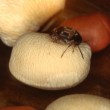
Insect-pests infesting edible stored pulses in India: A survey
Those tiny, dark brown creatures scurrying in pulses and float up when you wash dal for cooking – they are called bruchids. The tiny beetles consume a large portion of the edible pulses produced in India. Data and evidence to take strategic action to counter the loss of the protein-rich food item was lacking till now. An all India survey initiated by ICAR-Indian Institute of Pulses Research, Kanpur has fixed the problem. Aparna Kalawate reports:
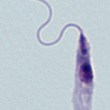
Fighting Leishmania with Synthetic Glycoside
A glycoprotein protects leishmania parasites from digestion by our macrophages. So the parasites can hitch a ride on macrophages to viscera, mucosa or skin and start dividing, causing leishmaniosis. Indian scientists have come up with a synthetic glycoside which targets the glycoprotein and effectively kills the parasites. Tanya Jain, NII, reports.

