Tamil Nadu 
Gluten allergy: enzyme structure, function and activity
(0)There are about fourteen million Indians who are affected by gluten allergy. The molecular mechanisms behind the problem are slowly being unravelled. Anuska Karmarkar reports recent Indian research on the structure, function and malfunctions of enzyme responsible for gluten allergy.
Cheyyar River Basin: recharging groundwater
When groundwater in river basins starts depleting, lives and livelihoods of the people there are threatened. The strategies for groundwater recharge differ from basin to basin. Khushbu Birawat reports research that clarifies what needs to be done in the Cheyyar River basin.
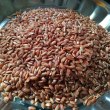
Fermented cooked rice: variety matters
Soak left-over rice in water and it starts fermenting. The bacterial species responsible depends on the variety of rice. Researchers from Chennai compares and contrasts the bacterial species in fermented rice of two distinct traditional varieties. They find that the bacteria have probiotic properties. Aritha Chandrasekhar reports.
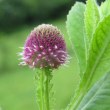
Eliminate mosquito larvae using East Indian Globe Thistle
Even a low concentration extract of the leaf of the East Indian Globe Thistle can kill mosquito larvae without impacting fish populations in water, say scientists from Loyola College, Chennai. They have identified the active compound, β-isocostic acid, and worked out how it acts. Dhatri Madduru reports:
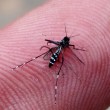
Mosquito-borne diseases – on the rise in coastal India?
Data from the National Centre for Vector Borne Disease Control shows that coastal states have a higher incidence of diseases transmitted by mosquitoes. Why? What can be done to reduce the problem? Researchers from the Sathyabama Institute of Science and Technology, Chennai investigate.
Fibre biosensor to diagnose cardiovascular disease
The amount of the proteins, troponin T and troponin I, in blood is helpful to assess the damage done due to a heart attack. Troponin I is a better indicator. Researchers have now come up with a lab-on-a-chip device to detect the protein. Read the details of their ingenious invention.

Sugarcane Detrashing: Design for Mechanisation
Removing dried yellow leaves from sugarcane is slow and painful if done manually. Existing mechanical devices cannot be adjusted to sugarcane varieties with different heights. Researchers from TNAU have come up with a design that is suitable for all varieties of sugarcane, reducing time and costs for farmers.
Chronic Kidney Disease in Rural Andhra Pradesh
Cases of chronic kidney disease of unknown cause were seen in Uddhanam, Andhra Pradesh and later, in Tamil Nadu and Pondicherry. Similar cases have been reported from other parts of the world. What are the kidney pathologies in such cases and what could be the cause? Recent research provides clues. A report by M Karunanithi.
Nitrogen Dioxide Sensors: high sensitivity, fast response
Zinc oxide can be used as a sensor for nitrogen dioxide, a harmful gas. Researchers at PSG Institute of Advanced Studies, Coimbatore find that a nanofiber of zinc oxide sheathed by a thin layer of another metal oxide can improve the sensitivity as never before. Vishal Baloria reports.
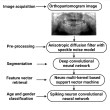
Predicting age and gender from dental images
Hemalatha Balan from the KGISL Institute of Technology, Coimbatore has come out with a method to automatically classify dental images as per age and sex – a boon for forensic science. Nazim Nazeer from the ICMR-National Institute for Research in Environmental Health provides the details:

