State 
From which state of India does the paper originate?
Bilayered 3D hydrogel dressing for chronic wounds
Researchers from the Rajiv Gandhi Centre for Biotechnology, Thiruvananthapuram have come up with a dressing that can help heal chronic wounds. Besides mimicking the matrix between cells, it contains bioactive peptides that help keep infections at bay, Tests show that wounds on diabetic mice heal fast. Read on for more.

Bloodberry: Rich in Omega Fatty Acids and Antioxidants
A humble herb growing naturally on river banks may actually be a superfood, says recent research from the CSIR-Central Food Technological Research Institute. Read more on the nutritional profile and nutraceutical advantages of bloodberry in this report by K Yashkamal.
Molecular markers to distinguish aromatic rice of Kerala
Researchers from the Kerala Agricultural University found three molecular markers to distinguish two aromatic rice varieties of Kerala from non-aromatic ones. This can help detect adulteration of aromatic rice with non-aromatic rice. The markers can also help researchers select aromatic rice plants for breeding purposes. Saravanan M reports.
Chronic Kidney Disease in Rural Andhra Pradesh
Cases of chronic kidney disease of unknown cause were seen in Uddhanam, Andhra Pradesh and later, in Tamil Nadu and Pondicherry. Similar cases have been reported from other parts of the world. What are the kidney pathologies in such cases and what could be the cause? Recent research provides clues. A report by M Karunanithi.
Protecting brine shrimp from vibriosis: Probiotic bacteria
The brine shrimp, used for toxicity tests in labs, is an important fish feed in aquariums and aquaculture. But commercial scale breeding of brine shrimp faces risk of bacterial infections. Researchers have found a way to protect brine shrimp from bacterial infections by using probiotic bacteria. M S Shivakumar reports.
Malignant Melanomas in India
Melanoma patients in India have a pattern of mutations that is different from the pattern seen worldwide, say researchers from the Homi Bhabha National Institute. While 75% of the patients in global sample have mutations in two genes, Indians cases have only 31%. A Anuradha reports.
Nitrogen Dioxide Sensors: high sensitivity, fast response
Zinc oxide can be used as a sensor for nitrogen dioxide, a harmful gas. Researchers at PSG Institute of Advanced Studies, Coimbatore find that a nanofiber of zinc oxide sheathed by a thin layer of another metal oxide can improve the sensitivity as never before. Vishal Baloria reports.
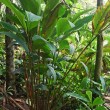
Wild Edible Plants: Wancho tribe diet
The Wancho tribe in Patkai hills, Arunachal Pradesh do not follow their wild ways anymore and cultivate food. But they still collect wild plants as food. Researchers from NERIST, Arunachal Pradesh recently examined the nutritional qualities of four such plants. Rojjita Mishra reports.

Potato Peels and Pea Pods
Cellulases, enzymes that break down cellulose, are in high demand. But the supply is limited. Indian researchers have now come up with new sources and cheap raw materials to produce cellulases at an industrial scale. K. Yashkamal reports.

Bullet Chilli Seeds
Decades of irrigated cultivation of crops is turning agricultural lands more saline. So search is on for salt tolerant varieties. Recently, researchers from West Bengal explored the extent of salt tolerance of seeds’ germination and growth in a salt tolerant variety of chilli. Samikhya Bhuyan reports.

