Classrooms in the past were filled with the sound of pens on paper, pencil scribbles, sheets torn and notes being passed around. Now, the click-clack rhythm of typing on keyboards is more common.
Education is in the midst of another transformation. Immersive tools like virtual reality are being adopted. In biology, students don’t just read about human anatomy but actually get to step inside a beating heart and follow its functioning. In an astronomy course, space isn’t something miles away but can be accessed in the classroom itself. Virtual reality allows interaction. Instead of passively obtaining information, students can participate actively with knowledge.
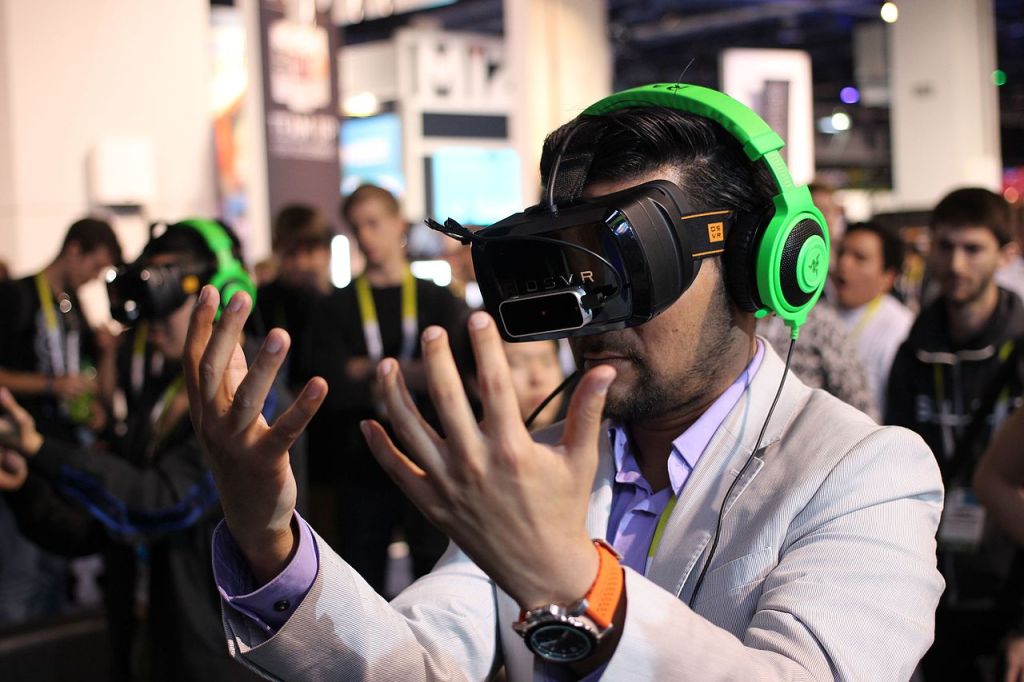
Image: Maurizio Pesce via Wikimedia Commons
However, even though virtual reality is being explored, its implementation is uneven.
Why?
Sarika Sharma, Jatinderkumar R. Saini and Sonica Rautela, Symbiosis International (Deemed University), Pune collaborated with an independent researcher in the US to look into the issue.
Current research on virtual reality focuses on the teacher’s perspectives and some studies investigate student outcomes. But not many studies analyze the factors that affect the decisions of educators to use virtual reality. So the researchers examined the motivations, perspectives and hinderances that higher education faculty face when designing courses in virtual reality.
They took the technology acceptance model into consideration, since it provides insights into how people accept new technologies. The acceptance of technology relies on its perceived usefulness and ease of use.
But usefulness and ease of use alone are not sufficient, they reasoned.
Educators do not have the competence to make use of the new technologies. Insufficient digital skills can deter teachers from implementing virtual reality. To promote technology adoption by teachers, institutions need to provide technical assistance and offer infrastructure, training, and support for troubleshooting.
The researchers adopted a quantitative method using structured questionnaires. The survey was crafted to understand factors such as digital skills, technical assistance, perceived utility, and enjoyment-driven motivation. Information was gathered from a group of 341 educators.
The researchers used confirmatory factor analysis to see if the data aligned with their model. The method verifies whether survey questions effectively assess the concepts they aim to evaluate.
The researchers also used structural equation modelling to study the connections between different variables.
Attitude, they found, is crucial in influencing adoption. When educators view virtual reality as user-friendly and advantageous, they are more inclined to a positive outlook, increasing the chances of adoption.
The results show that digital skills and technical assistance enhance perceived ease of use, which subsequently affects attitude and results in adoption.
Educators are more inclined to adopt virtual reality when they possess confidence in their skills, obtain institutional backing, and find pleasure in using the technology.
A key discovery of the research is the significance of hedonic motivation, enjoyment in using technology. The researchers found that enjoyment not only improves user experience but also serves as a mediating factor, encouraging educators to embrace VR.
Though virtual reality has the potential to transform education, its effective execution relies on various human and organizational elements. For broad acceptance, technologies need to be not just functional but also user-friendly and pleasurable.
Educational institutions should, therefore, prioritize improving digital skills, offering ongoing technical assistance, and fostering positive user experiences to promote the incorporation of virtual reality into teaching methods.
Journal of Applied Research in Higher Education 18 (1): 298-312 (2026);
DOI 10.1108/JARHE-07-2024-0327
Reported by Janhvi Ahuja
Symbiosis Institute of Media and Communication
 STEAMindiaReports
Leave a comment