For cheaper cellulase production
Cellulase, an enzyme that breaks down cellulose, is highly valued by paper and textile industries. In textile industries, for instance, it is used to smoothen garments, and to remove excess dye from fabrics.
Cellulases can also convert biomass into simple sugars which can then be fermented to produce bioethanol. So the demand for cellulases is rising. But the supply is weak.
To produce cellulases, industries currently use fungi. The filamentous nature of fungi and their low cellulase production capacity make the process very costly and inefficient.
A group of researchers at IIT (BHU), Varanasi have been working on bacteria that produce cellulases. They started looking for some cheap substrates to mass culture these bacteria for producing cellulases on an industrial scale.
During discussions with colleagues in various Indian, Irish and Saudi Arabian universities, they hit upon a combination of cheap raw materials: potato peel and pea pod waste from food processing industries. Potato peels have cellulose, starch, and minerals. Pea pod waste provides nitrogen and sugar. To maintain moisture and to provide phytochemicals in the media, the researchers selected the roots of water hyacinth, an invasive aquatic plant.
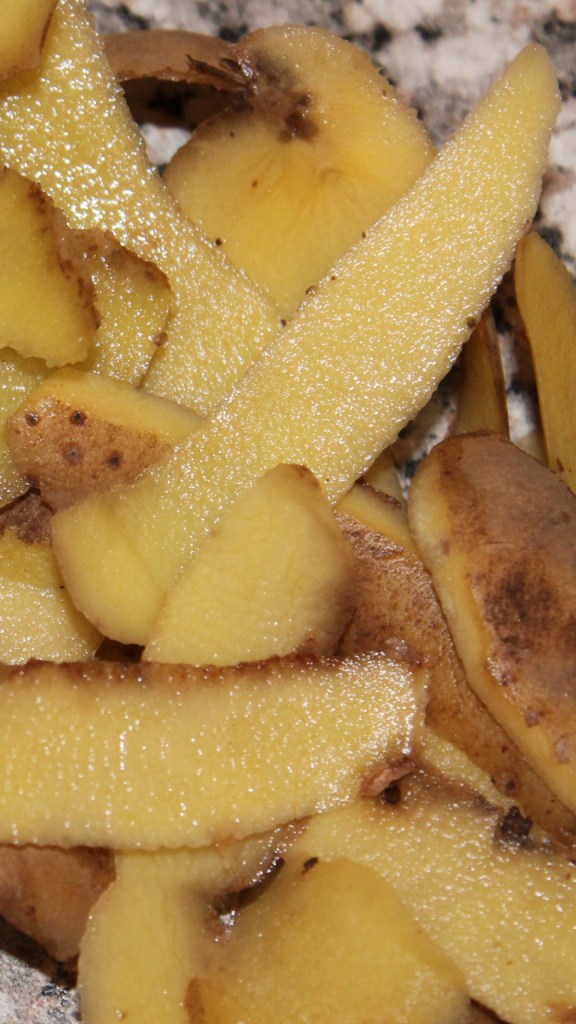


Images: Nick Youngson and Adoscam via Wikimedia Commons
Could this combination of materials produce cellulose in quantities large enough to be commercially viable?
The researchers collected potato peels and pea pods from the institute’s canteen. The potato peels were chopped into small pieces. From the pea pods, the team made an extract. They fished for water hyacinth plants in a nearby pond. The roots were washed and dried in an oven. And an extract was prepared by heating the material in distilled water.
The extract of water hyacinth roots and pea pods were used as nutrient media for solid state fermentation using potato peels as substrate.
Based on their earlier studies involving 16 different bacterial species, the researchers chose two bacterial species, Bacillus subtilis and Bacillus coagulans, for producing cellulase enzymes.
After inoculating the two bacteria on the solid medium, they evaluated the quality and quantity of the cellulases produced, at regular time intervals. The researchers found that the maximum cellulase activity was achieved within a day after bacterial incubation. Fungal cellulase production, in contrast, takes six days.
Encouraged by the results, the researchers optimised the process by trying various permutations and combinations of the raw materials, pH and moisture level. A ratio of 10 parts of water hyacinth root extract to 40 parts of pea pod extract was found to be optimum for enzyme production. The best temperature was 35 degrees celsius and optimum pH, 5.5.
The bacteria produced three types of cellulases: cellobiohydrolase, glucosidase, and glucanase – a highly desirable feature for the commercial production of biofuels.
In addition to the cellulases, glucose was a byproduct, especially at higher temperatures. At a potato peel concentration of six grams per litre at a temperature 50 °C and pH 5, 26 grams of glucose was produced – glucose that could be used to produce biofuels, thus increasing the value of the waste multi-fold.
This new method for producing cellulase using bacteria with potato peels, pea pod waste and water hyacinth root extract as culture medium could make cellulase production more sustainable and affordable.
It would also help to reduce the environmental impact of waste disposal and create new economic opportunities.
DOI: 10.1007/s12033-023-00789-w;
Molecular Biotechnology, July 2023
Reported by K. Yashkamal
K. S. Rangasamy College of Arts and Science, Tiruchengode
This report was written during the 4th online workshop organised by Current Science.
All reports on this site (except those in the archives) are free-to-use for Indian media houses.
 STEAMindiaReports
Leave a comment