Technology 
Sensing Hydrogen Sulphide
Hydrogen sulphide, toxic at high concentrations, is an important part of out physiology at very low concentrations. A sensor that is sensitive enough to detect the changes in its concentrations are important in the diagnosis of many diseases. Indian researchers have now found a way, using the chromophore of a fluorescent protein.
Extracting Potash from Mica Scrap Using Lime Mud
Researchers from the Institute of Minerals and Materials Technology, Bhubaneshwar report a method to use scrap mica and slime mud, a solid waste from paper industries to produce the much needed potash for agriculture.

Drum Composting for Household Kitchen Waste
IIT Bombay and NEERI Nagpur suggest decentralised composting of kitchen and garden waste to alleviate the urban wet gargabge problem. They developed a modified drum technique to accelerate compost production within five weeks.
Paper Industry Waste to Construction Material
Scientists from CSIR-CBRI Roorkee, IIT Roorkee and IIT Bombay tell paper mills how to avoid causing environmental harm by converting their waste materials to economically viable raw material for construction industry.
Hotspots for Stormwater Harvesting in Dehradun
Researchers from IIT Rourkee identifies the ideal sites for stormwater harvesting in Dehradun district using a web based geographic infomation system that allows public participation in decision making.
Growing nitrogen-doped graphene quantum dots on carbon fabric
Nitrogen-doped graphene quantum dots have incredible photocatalytic and electrocatalytic properties. Scientists have now found a way to grow them on carbon fibre, for use in cleaning polluted water.
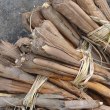
Hydrogen Fuel Cells: Palmyra sprouts biochar
S Ramaprabhu’s Alternative Energy & Nanotechnology Lab in IIT Madras reports a method to store hydrogen at room temperature. A step towards making vehicles running on hydrogen fuel.

Driverless vehicles: Improving navigation in traffic
Baljit Kaur and Jhilik Bhattacharya, Thapar Institute of Engineering and Technology, Patiala help improve navigation of driverless vehicles in traffic by making it easier for responding to surrounding vehicles.

Titanium Nanoflower Evolution: Optimising morphology for solar cells
Researchers from the Shivaji University report gaining control on the morphology of titanium dioxide nano structures. Titanium dioxide crystals resembling cauliflowers are better for application in dye sensitised solar cells, they say.
Making Boats with Discarded Fishing Nets
Discarded fishnets cause havoc in marine environment. So use it to make fishing boats and save on fibreglass in the composite, advise researchers from Tamil Nadu

