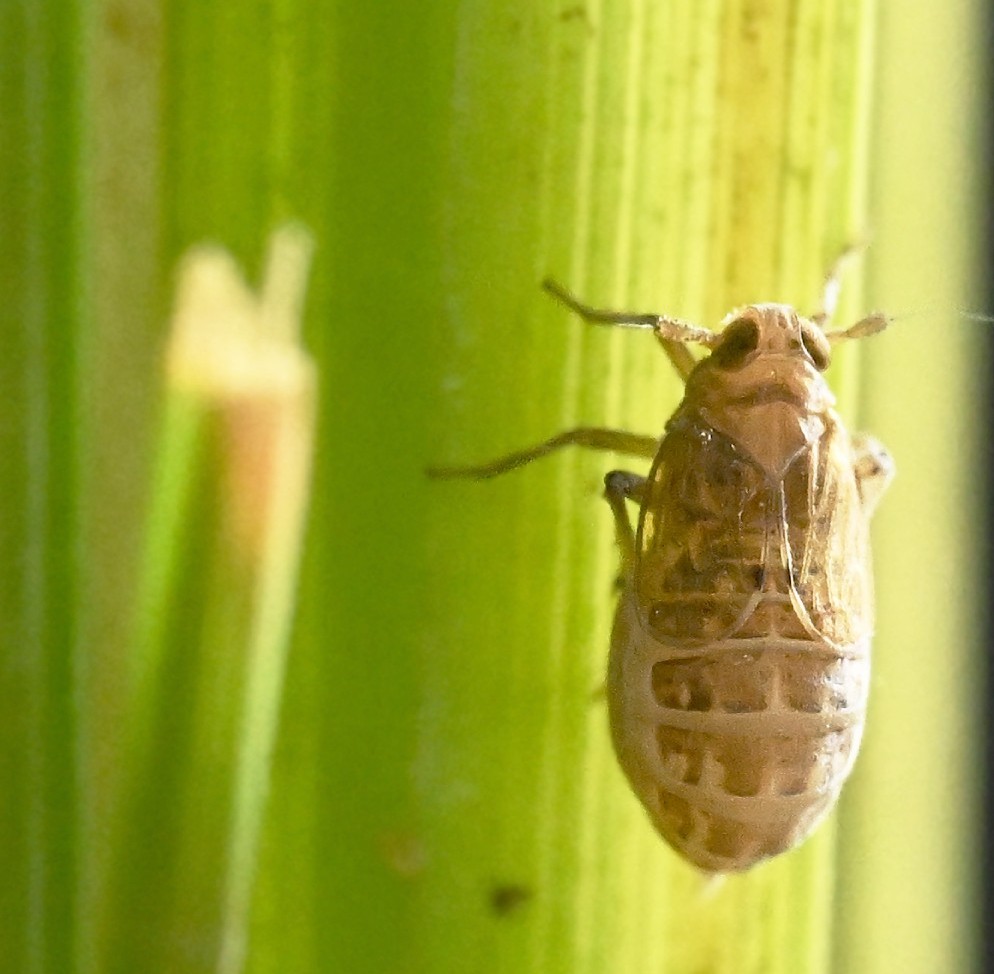
The brown planthopper, Nilaparvata lugens, is a devastating pest in rice ecosystems. It feeds on plant sap, causing the rice plant to wilt and die. High population densities of this pest lead to hopperburn – complete crop loss in the area.
Presently, this pest affects rice crops mostly in the eastern and southern states of India. Will the projected changes in climate change the habitat of the pest, enlarging its habitat suitability and threaten our national food security?
Image: Guru Prasanna, CRRI
Recently, researchers from the Central Rice Research Institute, Cuttack, the University of Agriculture and Technology, Bhubaneswar, the ICAR-National Bureau of Plant Genetic Resources, Hyderabad and the ICAR-RCER, Farming System Research Centre for Hill and Plateau Region, Ranchi collaborated to tackle the problem.
First, to map the brown planthopper’s current hotspots across India. The research team selected sampling points from major rice-growing areas across the country. They verified the sampling locations using tools like Google Earth, to ensure they were within major rice-growing areas. Then they conducted roving surveys across these regions and collected field data on the occurrence of the pest. The researchers also collated data on the occurrence of the species from secondary sources, such as published research reports and open-source databases.
To identify statistical correlations of the habitat suitability for the pest with climatic variables, the researchers extracted the climate data of 1969–2000 from the WorldClim database. They selected eight bioclimatic variables to check for any correlations.
To map the brown planthopper habitats, the team used the MaxEnt model. The MaxEnt model provides a more comprehensive assessment than previous models that relied on fewer variables or localized data.
Thus, the team identified annual mean temperature as the most influential variable, among temperature-related variables. And among the precipitation-based variables, they found annual precipitation the second most important factor for brown planthopper habitat suitability. The findings emphasise the role of climate as a primary driver for the expansion of the pest’s infestations.
Now the research team tackled the second problem: how will the high risk of future infestations of the brown planthopper change when climate changes as suggested by the climate models?
To estimate the percentage of land area that will become highly suitable for the brown planthopper for the years 2050 and 2070, the researchers used climate data projected by climate models based on four different shared socioeconomic pathways. These pathways are projections of the future emission trajectories based on various scenarios of possible global development. The projected climate scenarios between 2050 and 2070 indicate a substantial expansion of the pest into regions currently considered low-risk.
The eastern and southern rice belts in Tamil Nadu, Andhra Pradesh, Telangana, Odisha, West Bengal and Chhattisgarh are expected to remain a high-risk zone through 2070. Karnataka, Kerala, and parts of Maharashtra are projected to have moderate suitability. Assam may transition from unsuitable to mildly suitable. Northern temperate regions in Himachal Pradesh, and Jammu and Kashmir are likely to stay generally unfavourable due to cooler climates and scattered rice cultivation. However, they also remain at risk of transient infestations caused by monsoon-driven wind migration, say the researchers.
These findings highlight a critical need for region-specific early warning systems and climate-resilient pest management strategies. The researchers advocate for integrating these predictive models into national agricultural planning.
India, the world’s second-largest rice producer, faces significant threats to its agricultural stability from the expansion of the habitat range of this pest due to climate change. So, there is an urgent need to breed and distribute heat-tolerant rice varieties that can withstand rising temperatures and the consequent increase in pest pressure, say the researchers.
Annals of Applied Biology 188 (2): 631-643 (2026);
DOI: 10.1111/aab.70075
Reported by Sanghamitra Deobhanj
Freelance science writer, Cuttack
 STEAMindiaReports
Leave a comment