In the past few decades, India has seen rapid urbanization. Mega cities such as Delhi and Bengaluru have been growing rapidly. Does this uneven growth impact smaller towns nearby?
According to the agglomeration shadow hypothesis, big cities absorb resources and investment from neighbouring smaller towns. The borrowed size hypothesis, on the contrary, suggests that small towns close to big cities gain access to markets, employment opportunities and infrastructure spillovers.
Which hypothesis is closer to reality?
Sabyasachi Tripathi, Symbiosis Centre for Urban Studies, Pune recently collaborated with two international universities to evaluate the hypotheses in the Indian context.
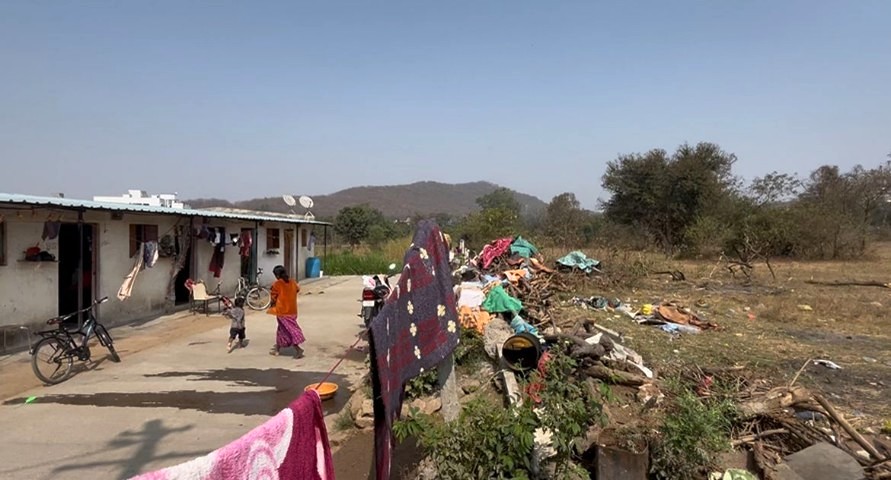
Sus Gaon is becoming Sus Shahar due to proximity to Pune Image: R Rakendu
The researchers examined 3,755 Indian towns with a population of less than one lakh as per the 2011 census data. To understand deprivation in these towns, they looked into housing conditions, access to basic services, medical infrastructure and educational facilities.
They thus identified 18 indicators that quantify these factors. Housing indicators included the percentage of run-down buildings and houses constructed using temporary materials as well as ownership of household property. Basic services were access to electricity, drainage, sanitation, safe drinking water, cooking fuel and banking services. Healthcare institutions were gauged in terms of hospitals, and the number of beds and doctors. Education infrastructure included schools and degree colleges. Using principal component analysis, the researchers combined these indicators to create a town-level deprivation index. They could thus quantify the deprivation level of the towns.
The quantification helped examine the question: what are the determinants of deprivation?
The researchers used two regression models to find out. The results revealed that deprivation is higher where distance to highly populated cities is higher. This suggests that small towns close to big cities are likely to be less deprived. Instead of being marginalized by metropolitan centres, small towns can receive quantifiable advantages through closeness to big cities.
The size and density of population, the researchers found, are linked to lower levels of deprivation. If small towns are far away from state capitals and district headquarters, they are more deprived. This emphasizes the importance of political accessibility and administrative integration.
“Our findings indicate that agglomeration economies alleviate deprivation in cases where connectivity and infrastructure is sufficient,” says Komali Yenneti, University of Wolverhampton, UK.
The researchers found that the most deprived towns were concentrated in the eastern and central states, with Bihar and some towns in West Bengal forming the majority. Higher income states such as Maharashtra and Haryana had relatively lower numbers of deprived towns.
The level of development of towns varied in the middle-income regions. Intra-state inequalities were stark.
“To reduce disparities between regions and make urban growth more balanced and sustainable, we need to focus on expanding infrastructure, increasing access to markets and improving governance in small towns,” says Arup Mitra, South Asian University, New Delhi.
“The percentage of urban population in India is expected to hit over 40 percent by 2030. It is high time we consider small towns part and parcel of the national urban development strategy,” adds Sabyasachi Tripathi, Symbiosis Centre for Urban Studies, Pune.
Asia-Pacific Journal of Regional Science 10:1 (2026);
DOI: 10.1007/s41685-025-00411-8
Reported by R. Rakendu
Symbiosis Institute of Media and Communication, Lavale, Pune
This report was written as part of an assignment
given to media students in a workshop
at the Symbiosis Institute of Mass Communication, Pune.
We organise training workshops aimed scientists and science faculty,
to improve skills for writing scientific papers, reviews and grant applications.
Training workshops for PhD scholars to help accelerate
the writing of their thesis are also organised periodically.
For details of such workshops, click on the link below:
scienceandmediaworkshops.
 STEAMindiaReports
Leave a comment