Polycystic ovary syndrome is common among women in the reproductive ages. Women with irregular or missed menstruation are sometimes found to have small cysts on the ovaries. Such patients also often show higher levels of androgenic hormones, excess hair growth and male-pattern baldness. These manifestations can cause psychological distress related to body image.
Vijendra Nath Pathak, Parul University, Vadodara and Yashvi Panjrath, Lovely Professional University, Punjab have been working on ways to help patients with polycystic ovary syndrome. They have been organising yoga camps to help the patients and noticed that the practice of the Surya Namaskar appeared to help some of the women overcome anxiety related to their body image.
The Surya Namaskar, a sequence of twelve poses in yoga, helps improve flexibility, strength and stamina.
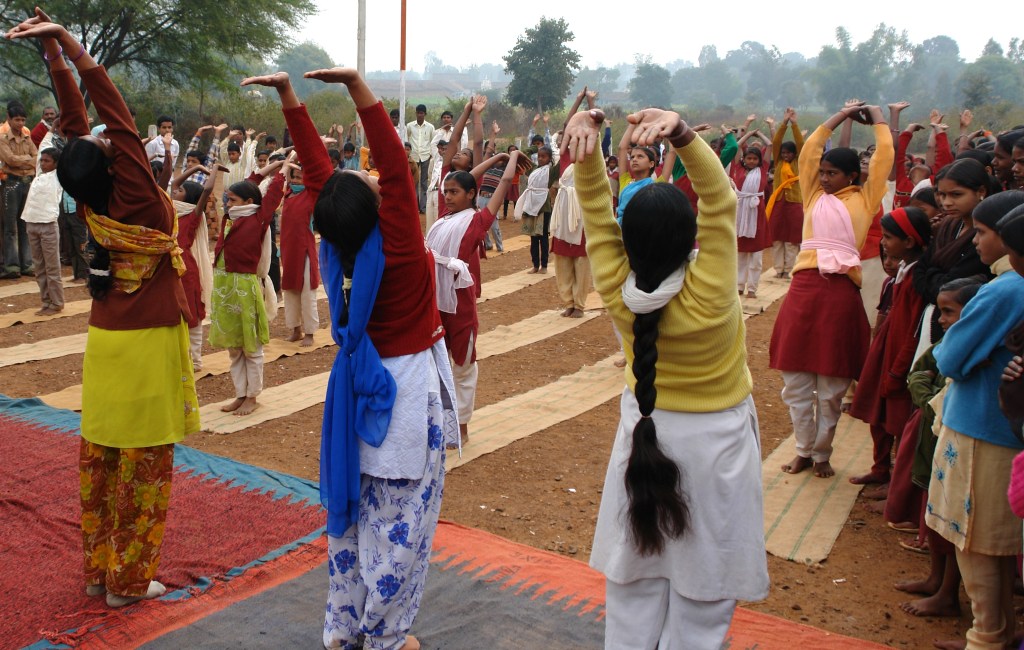
Image: Yann via Wikimedia Commons
But does the sequence really help reduce anxiety linked to body image?
To find out, the research duo took the help of Dr Krishan Kumar, at the Postgraduate Institute of Medical Education and Research, Chandigarh.
They gave around one hundred college-going women in Dehradun a validated questionnaire on social physique anxiety. The responses revealed that seventy, diagnosed with PCOS, had high levels of anxiety. Sixty of them, aged between 18 and 30, volunteered to participate in an experiment.
These women were randomly divided into two groups. The experimental group took part in Surya Namaskar sessions, where certified trainers conducted 50-minute sessions twice a week, for eight weeks. The trainers placed stress on breath control, posture and mindfulness. No participants dropped out of the experimental group.
The control group did not follow any structured physical activity.
After eight weeks, both groups completed the same body image anxiety questionnaire. The experimental group showed a significant drop in anxiety scores. The control group showed no change.
For women with polycystic ovary syndrome and body image anxiety, the practice of Surya Namaskar might provide relief, say the researchers.
Annals of Neuroscience I-8 (2025);
DOI: 10.1177/09727531251322635
Reported by K Sri Manjari
Science writer, Hyderabad
STEAMindiaReports: reporting research ignored by Indian media
scienceandmediaworkshops: building capacity of researchers
and building bridges between science and media
 STEAMindiaReports
Leave a comment