As a PhD scholar at NCL Pune, Ejaj Pathan got involved in studying dimorphism in fungi. Most fungi can exist in the single celled yeast form and, given the right conditions, change to the hyphal form, a faster growing network of elongated cells. It is the hyphal form that causes most fungal diseases in animals and plants.
Ejaj Pathan worked on Metarhizium anisopliae, a fungus that can insert its hyphal tip into insects and eat them from the inside. The fungus is now used against insect pests in agriculture. He also studied Benjaminiella poitrasii, a harmless fungus which could be easily manipulated to change from yeast to hyphal form and back. Ejaj succeeded in identifying and characterising the key enzymes that play a role in this reversible transition and got his PhD in the process.
While waiting for a postdoc position, Ejaj worked in a startup, exploring fungal morphogenesis to improve the production of chitosan, a polymer with high demand in pharma industries.
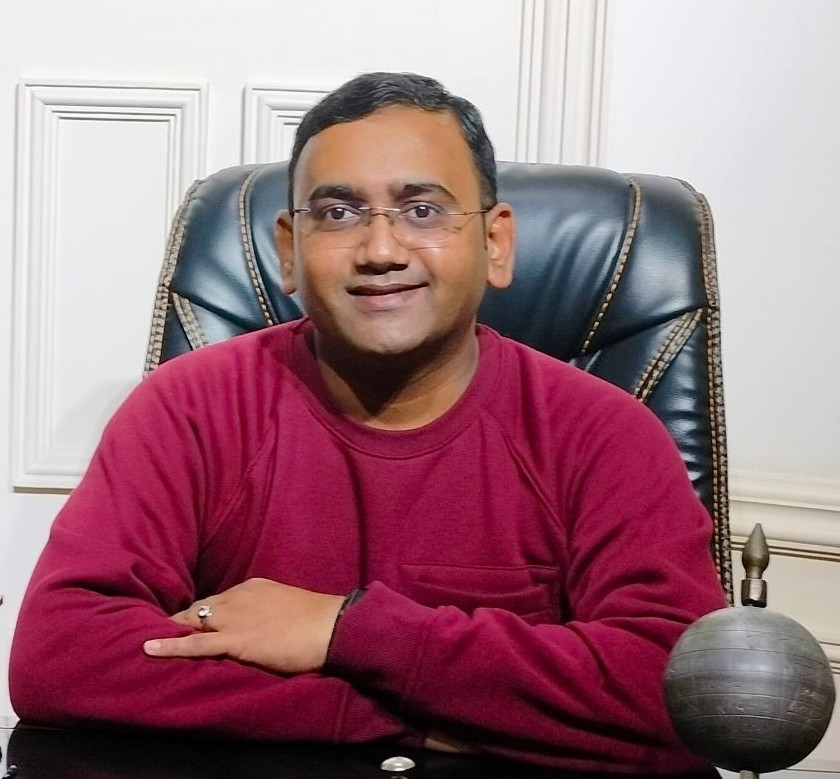
Then he got a postdoc position at IIT Bombay, where he worked on the correlation between morphology and citric acid production in Aspergillus niger, a filamentous fungus.
By the time he became an assistant professor at Symbiosis International (Deemed University), Pune, he was bubbling with research ideas. Setting up his own lab, inducting research scholars, as well as teaching postgraduates took up his time. But he soon got Simran Ghogare, a research scholar, to pursue one of his ideas.
Cells in the hyphal form of fungi and cells in cancers share common features: both reproduce rapidly and are invasive. What are the common molecular processes?
Simran started digging into literature on the topic. Besides viruses and bacteria associated with cancers, many types of cancer tissues, she found, have their own unique fungal signatures. Fungal species associated with oral cancer, skin cancer, esophageal cancer, lung cancer etc. seemed to be different. The data did not seem to fit the idea that these fungi were the results of accidental contamination of cancer tissue biopsy samples.

Moreover, many cancer patients show a tendency to get fungal infections. Some medical professionals think that it is due to the treatments and the consequent reduction in immunity. But Ejaj and Simran thought that it was possible that some of the cancers could be caused by the fungi. Simran dug deeper into available literature.
Like some bacterial toxins, fungal toxins, such as aflatoxins, may also lead to the development of certain cancers. But there was adequate literature to show that it was not merely a case of toxins. On the one hand, the tumour microenvironment was conducive to the switching of the yeast form to the hyphal form. On the other hand, there were signal transduction pathways in the hyphal form that are also found in the pathways involved in the invasiveness and immune evasion of cancer tissues. Cell cycle regulators that help form or suppress tumours were involved in the growth of the hyphal tip. Genes and proteins involved in cancerous growth were also involved in the hyphal form. In other words, it was win-win for both cancer and fungi to collaborate, at the cost of loss of normalcy in cell division and the functioning of the host cells.
Besides the commonalities in the genes and proteins involved, Simran dug up evidence of the involvement of RNAs – non coding RNAs, microRNAs and circular RNAs – that could be common between fungal infections and cancers. Evidence for the case of fungal involvement in cancers was rapidly increasing. So was a potential solution.
Stopping the transition of fungi to the hyphal form causes apoptosis, programmed cell death. So apoptosis inducers may be able to stop fungal pathogenesis. Similarly, since cancer cells seem to escape the normal process of apoptosis, there is a possibility that drugs that can stop fungi from forming hyphae may stop cancer progression. Hence combining anticancer and antifungal treatments could provide hope for those who are diagnosed as cancer patients…
Simran started digging into literature on antifungals. Unfortunately, most antifungals, she found, are toxic. Moreover, fungi are becoming resistant to most of the available antifungals. Even the drugs that are in the pipeline and are undergoing clinical trials did not seem promising.
But Ejaj has ideas that could solve the problem. The transition of fungi from the yeast to the hyphal form is a good target for drug development which can perhaps be used against cancer as well. Moreover, unlike fungi, human beings don’t have chitin or chitosan. So drugs that target these molecules may not have any impact on human biochemistry.
Ejaj has also worked out a path for the experimental work for Simran’s PhD, starting with collecting cancer tissue samples, isolating fungi from them and double checking the results of the papers she has reviewed.
Meanwhile he will start hunting for funds to make further research possible.
Cell Death Discovery 11:188 (2025);
DOI: 10.1038/s41420-025-02483-z
Reported by P K and Atig Udham
Freelancers based in Goa
STEAMindiaReports: science news and features free for Indian media to reproduce
scienceandmediaworkshops: training to write science news, scientific articles, reviews and grant applications
 STEAMindiaReports
Leave a comment