Ecology 
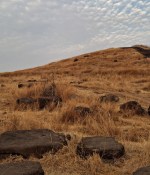
Savannas of Sahyadri: triangulating traditions and scientific disciplines
(0)Some people claim that the savannas in Maharashtra were once forests and that deforestation turned them into the existing grasslands. Researchers in IISER Pune counter this argument, using evidence from Marathi literature, paintings, ecology, climatology and the cultural traditions of the region. Yogita Karpate reports.

Fungus farms of termites: weed control
Some termite colonies farm specific fungi as their food and carefully eliminate other fungi. How do they do it? Research by a team in IISER Mohali has recently uncovered the methods that a termite common in India use to prevent unwanted fungi from their fungal farms. Read the report.
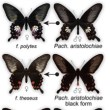
Evolution of mimicry in swallowtail butterflies
Krushnamegh Kunte and team at NCBS Bangalore have been puzzling over the evolution of butterflies that mimic other butterflies distasteful to predators. Interestingly, in some species only the females mimic other butterflies. Now they have collected enough clues to explain the phenomenon. Rahul Kumar, Sheodeni Sao College, Kaler reports.
Nitrous oxide in groundwater: based on land use?
Chemical nitrogen fertilisers increase nitrous oxides in atmosphere leading to climate warming. Besides atmosphere, nitrous oxide accumulates in groundwater also. Researchers from NIO and IISc examine the extent of the problem in groundwater under land used for agriculture, in coastal areas, banks of estuaries and forests of India.

Crab diversity in the estuaries of Kerala
Researchers from the University of Kerala, recently reported spatial and temporal variations in mangrove crab diversity in five of the estuaries of Kerala. The fiddler crab, out of the thirteen species of the short tailed crabs, Austruca annulipes, was the most abundant species and Pseudosesarma glabrum was the rarest. Read more.

Strategic Action for Managing Forests in India
Forests are sources of livelihood for some, cleaner environment and a carbon sink for some others and a national pride for yet others. Yet forests are depleting and forest dweller, villagers nearby, forest officers and decision makers do not agree on how to manage forests. Recent research shows a logical way to manage forests sustainably.
Mercury and Methylmercury: detect and discriminate
Mercury in the environment is dangerous to human health. Methyl mercury is even more so. Nilanjan Dey from BITS Pilani, Hyderabad has designed a cost effective and highly sensitive method to detect both.
Heat loving Bacteria from the Himalayas: Breaking cellulose
Researchers from the CSIR-Institute of Himalayan Bioresource Technology have isolated a heat loving bacteria from the cold Pangi Valley of the Himalayas. The ability of the strain to break down cellulose very rapidly will find many industrial applications.
Biological Control of Aphids: ladybird beetle
Aphids suck the sap out of our crops. The zigzag ladybird is a natural predator that can control the pest. Researchers from IARI find that the ladybirds do not even have to eat the pests: the mere presence of the predator is adequate to drive away the pestilence. Read more.

Expanding peafowl distribution in Kerala
Sanjo Jose and P O Nameer, from the Kerala Agricultural University were puzzled about increased sightings of peacocks in Kerala. Investigating into the environmental and climatic factors that increase distribution of peafowl, they find that the species may soon extent its territory in Kerala.
 STEAMindiaReports