Thematic Area 
Whether it belongs to Medicine, Agriculture, Animal Husbandry, Fisheries, Technology, Environment…
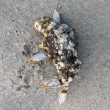
Mussel-inspired Adhesives
A strong adhesive that works well under water and in air. Metal, glass, wood, plastic, paper – it works on them all. Taking inspiration from the adhesive used by mussels to stick on surfaces, researchers at IITK take it to a new level: the new adhesive is self-healing. Is the adhesives industry listening?

Fungi in cancer: revealing deeper relationships
Why do cancer biopsy samples show presence of fungi? Why is it that the fungal species found are specific to different types of cancers? Is it that the tumour environment allows fungi to invade? Or is it that fungi convert normal cells into cancerous ones? Read on to find answers.

Enzyme to Release Aroma from Mango Juice
Mango aroma is released due to the action of an enzyme that breaks the chemical bond between a sugar and the aromatic compound. The enzyme is inactivated in mango pulp and juice. Researchers have now found a way to produce such an enzyme in large enough quantities for industrial use. Read on for details.

Mumbai-Pune Expressway: design and safety
The Mumbai-Pune expressway is notorious for accidents. Researchers from the Sardar Vallabhbhai National Institute of Technology, Surat examine the design of the 22 curves there and analyse the speeds of vehicles when navigating the curves. They identify the curves that have low margins of error in terms of safety. Read on…
Water Management in Banda: paving the way for drought prone districts
Researchers from the Indian Institute of Management Ranchi recently published a case study of managing water in Banda, which could be emulated and reproduced in drought-prone districts across the country. Nupur Sinha, BML Munjal University reports.
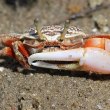
Crab diversity in the estuaries of Kerala
Researchers from the University of Kerala, recently reported spatial and temporal variations in mangrove crab diversity in five of the estuaries of Kerala. The fiddler crab, out of the thirteen species of the short tailed crabs, Austruca annulipes, was the most abundant species and Pseudosesarma glabrum was the rarest. Read more.
Bilayered 3D hydrogel dressing for chronic wounds
Researchers from the Rajiv Gandhi Centre for Biotechnology, Thiruvananthapuram have come up with a dressing that can help heal chronic wounds. Besides mimicking the matrix between cells, it contains bioactive peptides that help keep infections at bay, Tests show that wounds on diabetic mice heal fast. Read on for more.

India Research Reports, 2nd quarter 2024
Here are forty six science news reports published in Current Science from April to June this year compiled into one PDF. The other reports that you see on this site are spill overs: when the number of reports go more than what a four page column can accommodate, they are posted on this site. But… Read More ›
Contemporary scientific research in India
In spite of cuts in budget allocation for research, delays in project funding and payments for fellowships, India has not yet managed to destroy the backbone of researchers as it has done to media and civil society. Here are some snippets of contemporary research in India, reported in Current Science in the first quarter of… Read More ›

Bloodberry: Rich in Omega Fatty Acids and Antioxidants
A humble herb growing naturally on river banks may actually be a superfood, says recent research from the CSIR-Central Food Technological Research Institute. Read more on the nutritional profile and nutraceutical advantages of bloodberry in this report by K Yashkamal.
 STEAMindiaReports