Thematic Area 
Whether it belongs to Medicine, Agriculture, Animal Husbandry, Fisheries, Technology, Environment…
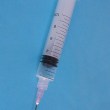
Quicker, low-cost breast cancer diagnosis
Doctors at the Netaji Subhash Chandra Bose Government Medical College and Hospital, Jabalpur have come up with technique to diagnose breast cancer even in remote health centres. All you need is a syringe available even in resource poor clinics and a microscope. Sanghamitra reports from Cuttack.
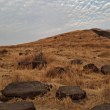
Savannas of Sahyadri: triangulating traditions and scientific disciplines
Some people claim that the savannas in Maharashtra were once forests and that deforestation turned them into the existing grasslands. Researchers in IISER Pune counter this argument, using evidence from Marathi literature, paintings, ecology, climatology and the cultural traditions of the region. Yogita Karpate reports.
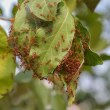
Insect-rich Tribal Diet: Medicine in Mayurbhanj
Insects are rich in protein and other nutrients. They are a source of medicine too, for tribals in Odisha. Sanghamitra from Cuttack reports investigations by researchers from three different universities in Odisha on entomophagy as food and as traditional medicine by tribals in Mayurbhanj district.
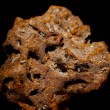
Fungus farms of termites: weed control
Some termite colonies farm specific fungi as their food and carefully eliminate other fungi. How do they do it? Research by a team in IISER Mohali has recently uncovered the methods that a termite common in India use to prevent unwanted fungi from their fungal farms. Read the report.
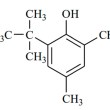
Antioxidant in Aviation Fuels: How does it work?
Oxidation of aviation fuel before it reaches the engine can lead to clogging and failure of the aircraft. Antioxidants are used to reduce this danger. But how do they really work at a molecular level? Ashutosh Gupta from Varanasi explains the research done by researchers in Kottayam and Chennai
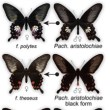
Evolution of mimicry in swallowtail butterflies
Krushnamegh Kunte and team at NCBS Bangalore have been puzzling over the evolution of butterflies that mimic other butterflies distasteful to predators. Interestingly, in some species only the females mimic other butterflies. Now they have collected enough clues to explain the phenomenon. Rahul Kumar, Sheodeni Sao College, Kaler reports.

Water Resources in Jhelum Basin: planning for climate resilience
The Jhelum is a perennial river because of snow and glacier melt. If the climate changes as predicted by climate models, what will happen to the glaciers in the basin? What should we anticipate in terms of water resources? Researchers from Kashmir investigated recently. Sheikh Aneaus reports from Srinagar, Kashmir.
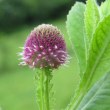
Eliminate mosquito larvae using East Indian Globe Thistle
Even a low concentration extract of the leaf of the East Indian Globe Thistle can kill mosquito larvae without impacting fish populations in water, say scientists from Loyola College, Chennai. They have identified the active compound, β-isocostic acid, and worked out how it acts. Dhatri Madduru reports:
Freshwater Fish Farms: Bacterial contamination?
Though fresh water fish from aquaculture farms are exposed to antibiotics, researchers do not find any multidrug resistant bacteria on fish sourced from farms. But when sourced from the market, the fish seems to have drug resistant bacteria. How does that happen? Read on

Surya Namaskar and anxiety in polycystic ovary syndrome
Can women with polycystic ovary syndrome benefit from practicing Surya Namaskar? Sri Manjari reports research done by Yashvi Panjrath, Vijendra Nath Pathak and Krishan Kumar, which suggests that practicing Surya Namaskar helps reduce anxieties related to body image, a common problem among women with PCOS. Read on…
 STEAMindiaReports