Agriculture 

Bullet Chilli Seeds
Decades of irrigated cultivation of crops is turning agricultural lands more saline. So search is on for salt tolerant varieties. Recently, researchers from West Bengal explored the extent of salt tolerance of seeds’ germination and growth in a salt tolerant variety of chilli. Samikhya Bhuyan reports.

Sex Selection Technology
Mukesh Kumar Gupta from the NIT Rourkela collaborated with Korean researchers to separate cattle sperms that carry X chromosome using a monoclonal antibody against sperms that carry Y chromosome. They could get 95% female embryos in vitro.

Bay Laurel Leaves: protect aquaculture fish
Fish productivity in aquaculture is affected by disease-causing microorganisms. To treat the diseases, antibiotics are used. But indiscriminate use leads to antibiotic resistance in the microorganisms. Instead of using antibiotics, we could improve the resistance of aquaculture fish to infections using immune-stimulants to activate immune responses to the infections. Recently, researchers at the Karnataka Veterinary, Animal and Fisheries Sciences… Read More ›
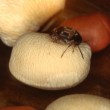
Insect-pests infesting edible stored pulses in India: A survey
Those tiny, dark brown creatures scurrying in pulses and float up when you wash dal for cooking – they are called bruchids. The tiny beetles consume a large portion of the edible pulses produced in India. Data and evidence to take strategic action to counter the loss of the protein-rich food item was lacking till now. An all India survey initiated by ICAR-Indian Institute of Pulses Research, Kanpur has fixed the problem. Aparna Kalawate reports:

Spotted Owlet: Biocontrol Agent in Agriculture
Researchers from the PJTSAU, Hyderabad investigated the dietary preferences of the spotted owlets in and around Rajendranagar. By analysing the pellets of indigestible food regurgitated by the owlet, the researchers demonstrate the value of the bird for farmers. Aparna Kalawate reports:
Phosphate-solubilizing bacteria to save on fertilisers
A bacterial isolate from the rock phosphate mine in Jhamarkotra, near Udaipur, solubilises phosphorus, potassium and zinc, secretes siderophores to immobilise heavy metals and thus improves plant growth. A biofertiliser waiting to be exploited, say researchers from IPL Biologicals Limited, Gurugram.

Strategic Action for Managing Forests in India
Forests are sources of livelihood for some, cleaner environment and a carbon sink for some others and a national pride for yet others. Yet forests are depleting and forest dweller, villagers nearby, forest officers and decision makers do not agree on how to manage forests. Recent research shows a logical way to manage forests sustainably.

Winter Productivity in the Arabian Sea
IIT Delhi has created a biophysical model to explain the influences of the Indian Ocean Dipole and El-Niño on the algal blooms in the Arabian sea. Simulations can now help predict algal bloom in the area – a boon for fishers to identify potential fishing sites.

Tamarind and Jackfruit Seeds: Improving vegetable shelf life
R Santhosh and Preetam Sarkar from the National Institute of Technology Rourkela have come up with a recipe for making films to increase shelf life of vegetables and fruits. The ingredients: carbohydrates from jackfruit seeds, xyloglucan from tamarind seeds and zinc oxide nanoparticles. Read about the process here.
Rice Plant Disease: Automatic identification
Some diseases of rice can destroy 80% of the crop. Timely detection of the diseases can save farmers from economic ruin. Researchers from Tamil Nadu and Karnataka have now developed a method to automatically detect three common rice diseases. Read on for details.
 STEAMindiaReports