Fisheries 
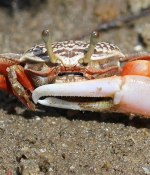
Crab diversity in the estuaries of Kerala
(0)Researchers from the University of Kerala, recently reported spatial and temporal variations in mangrove crab diversity in five of the estuaries of Kerala. The fiddler crab, out of the thirteen species of the short tailed crabs, Austruca annulipes, was the most abundant species and Pseudosesarma glabrum was the rarest. Read more.
Protecting brine shrimp from vibriosis: Probiotic bacteria
The brine shrimp, used for toxicity tests in labs, is an important fish feed in aquariums and aquaculture. But commercial scale breeding of brine shrimp faces risk of bacterial infections. Researchers have found a way to protect brine shrimp from bacterial infections by using probiotic bacteria. M S Shivakumar reports.
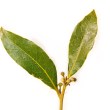
Bay Laurel Leaves: protect aquaculture fish
Fish productivity in aquaculture is affected by disease-causing microorganisms. To treat the diseases, antibiotics are used. But indiscriminate use leads to antibiotic resistance in the microorganisms. Instead of using antibiotics, we could improve the resistance of aquaculture fish to infections using immune-stimulants to activate immune responses to the infections. Recently, researchers at the Karnataka Veterinary, Animal and Fisheries Sciences… Read More ›

Winter Productivity in the Arabian Sea
IIT Delhi has created a biophysical model to explain the influences of the Indian Ocean Dipole and El-Niño on the algal blooms in the Arabian sea. Simulations can now help predict algal bloom in the area – a boon for fishers to identify potential fishing sites.
Funds from Fish Scales
The world is throwing away more than 2 million tonnes of fish scales as waste every year. Muhamed Ashraf and team from the ICAR-Central Institute of Fisheries Technology, Kochi have now found a way to convert the waste to wealth.
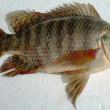
Tilapia Lake Virus: risk to rohu?
Tilapia lake virus is a RNA virus. RNA viruses are famous for evolving and switching hosts. So is co-culturing tilapia and rohu safe for aquaculture industry? Scientists from the ICAR-National Bureau of Fish Genetic Resources, Lucknow, inquire…
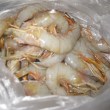
What is good for farmers may be bad for fishermen
The variations in the flow of fresh water from rivers into estuaries change salinity and the prawns migrate into the sea. Damming rivers can change affect the life cycle of estuarine prawns, say researchers.
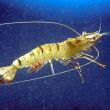
Identifying shrimps: metabolomic fingerprinting
A team of scientists from the ICAR-CIFT, Kochi have come up with a simple technique to identify shrimps using metabolomic finger printing. A database of high resolution mass spectrometry of different species of shrimps will make trading of processed shrimps more transparent.
Mahabali in a Well: new snakehead fish
When people saw a new snakehead fish in a well in Pathanamthitta, Kerala, they were confused. Which is this strange fish? Scientists from the ICAR-National Bureau of Fish Genetic Resources, Kochi now tell us the answer.
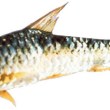
Endangered Malabar Mahseer
Scientists from the Kerala University of Fisheries and Ocean Studies, Kochi clear the confusions about the identity of Malabar mahaseer, Tor malabaricus. Using mitochondrial DNA, they establish that it is different from Tor khudree, settling a century old debate.
 STEAMindiaReports