At peak rush hour, traffic can shift from a smooth flow to a gridlock within minutes. A minor accident, sudden rainfall, or an unexpected surge of vehicles can disrupt entire traffic corridors before traffic control centers are able to respond. Detecting such abnormal events quickly and accurately remains a central challenge in urban traffic management.
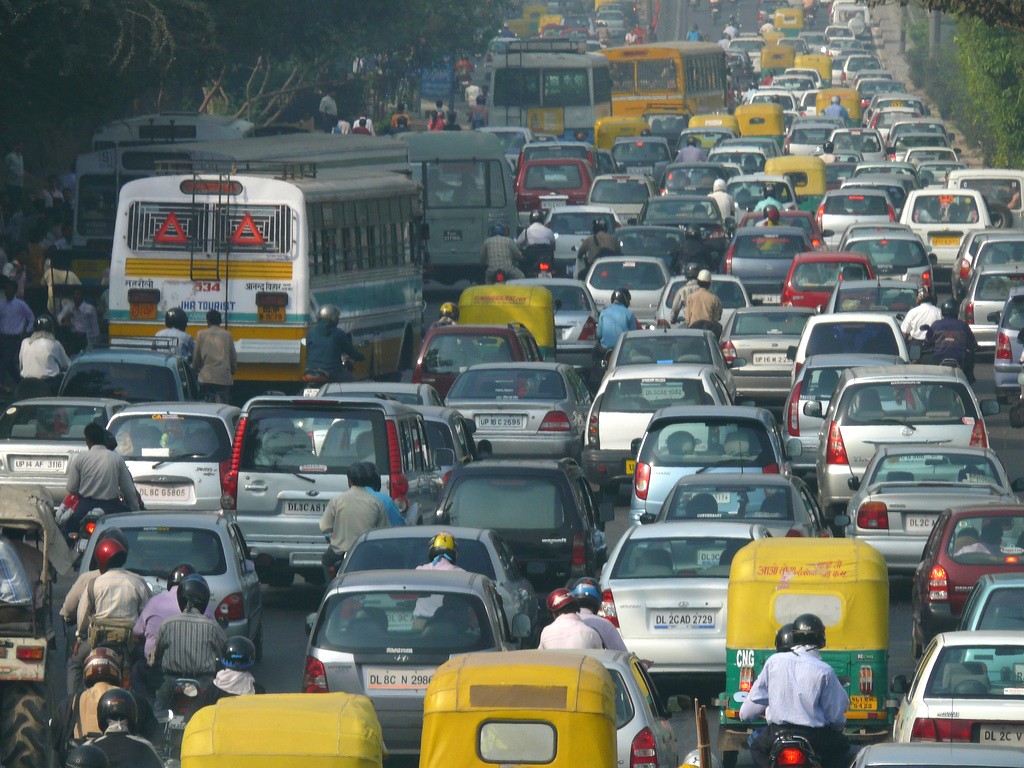
Image: NOMAD via Wikimedia Commons
Deepali Vora and her student, Pratik Jadhav, Symbiosis Institute of Technology collaborated with Shruti Patil, Symbiosis Center for Applied Artificial Intelligence and Abderrahim Benslimane, University of Avignon to tackle the problem.
Earlier, researchers had tried to predict traffic breakdowns using rule-based systems and basic machine learning models that often focused on single indicators such as a sudden drop in speed. However, traffic behaviour depends on many variables. So they were unable to distinguish between routine congestion and disruptions caused by incidents such as sudden rainfall or an accident.
To tackle this research gap, the research team adopted a multi-stage approach: first detect unusual traffic behaviour, then estimate the severity of the congestion, and finally check whether the disruption is linked to a specific incident such as an accident or weather conditions.
To test their approach, they acquired easily accessible traffic sensor data from highway networks in California as well as weather information for the same period. Earlier models had not taken this variable into account.
To identify irregular traffic behaviour, the researchers used the Isolation Forest algorithm, which helps detect unusual patterns such as sudden changes in vehicle density.
To classify congestion into categories such as high, medium and low, the researchers used k-means clustering. To check whether the abnormal traffic condition was triggered by an incident, they resorted to the cKD Tree, an algorithm which can be used to look up the nearest neighbours of any point in a set of k-dimensional points. The algorithm checked traffic stations within a 1.5 kilometre radius for incidents.
For learning from the given data, all three steps were enveloped with the long short-term memory algorithm. Including weather data helped the model account for external factors such as rainfall that may affect traffic flow.
During testing, the model achieved about 95 percent accuracy in classifying congestion levels and nearly 99 percent accuracy in identifying incident-related disruptions. The system performed better than several existing machine learning models.
The model was trained on a short data period of 15 days, which may not reflect long-term traffic patterns. Training and testing using longer period data from other cities can help improve accuracy and wider applicability of the model, say the researchers.
If used in real traffic control settings, such tools could help authorities respond faster to disruptions, manage routes more efficiently and support emergency services.
Scientific Reports 16:1516 (2026);
DOI: 10.1038/s41598-025-31470-8
Reported by Vidhi Thacker,
Symbiosis Institute of Media and Communication
 STEAMindiaReports
Leave a comment