India faces a substantial burden of mosquito-borne diseases. Two species in particular, Aedes aegypti and Culex quinquefasciatus, pose significant public health threats. A. aegypti is the primary vector for dengue, chikungunya, the Zika virus, and yellow fever. C. quinquefasciatus transmits filarial parasites, the West Nile virus, and the Japanese encephalitis virus.
To control these mosquitoes, synthetic insecticides can be used. But mosquitoes are developing resistance to the insecticides. The insecticides, moreover, leave toxic residues that accumulate in soil and water, and harm animals, insects and other non-target organisms.
M C John Milton and team from Loyola College, Chennai have been exploring plants as a source of compounds that can serve as an eco-friendly alternative to synthetic insecticides.
Recently, they found that one of these plants, Sphaeranthus indicus, well known in ethnobotanical studies as a medicinal plant, has insecticidal properties [1, 2].
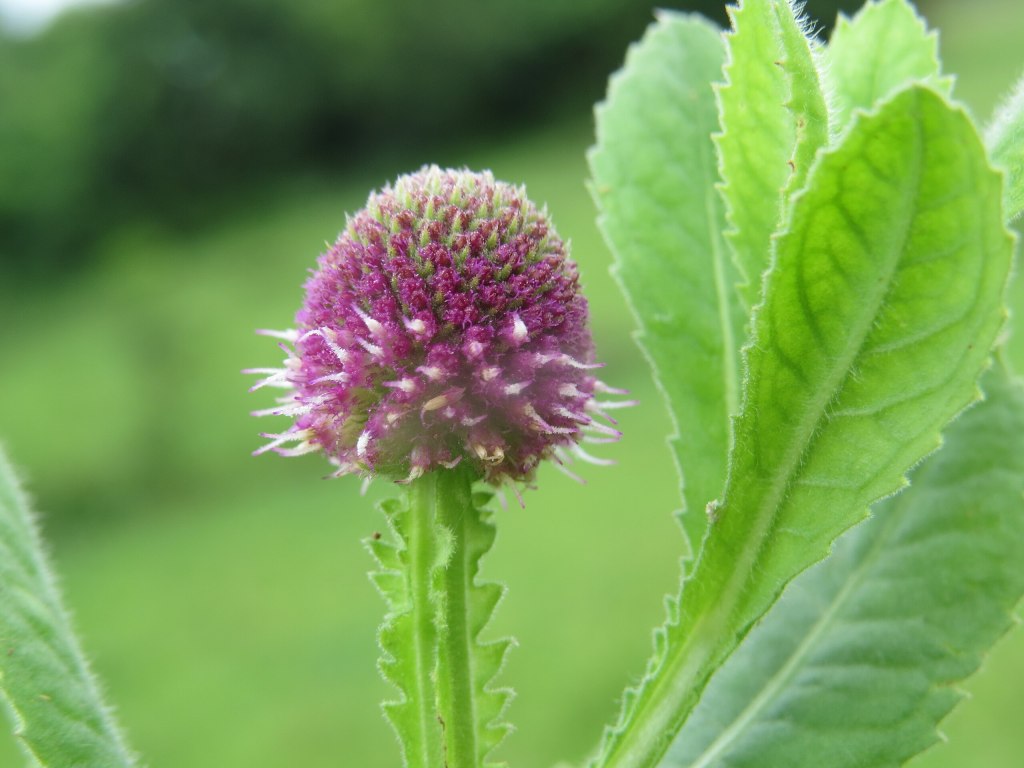
The East Indian Globe Thistle, a plant with spherical anthus (flower) is seen in most parts of India. Image: Vinayaraj via Wikimedia commons
They also investigated the bioactive compound in the leaf extract of the plant and discovered that it is β-isocostic acid [3, 4]. But how does β-isocostic acid act?
The team used molecular docking and found that the target of β-isocostic acid was acetylcholine esterase, a well-known target for many other insecticides [5].
Acetylcholine is a neurotransmitter and interfering with its biochemical pathway might have unwanted effects on non-target organisms. To check the toxicity of the compound on aquatic organisms, the researchers extracted biochemicals from dried and powdered leaves of the plant. They separated the chemicals into 85 fractions using silica gel column chromatography.
Alex Yagoo and Jelin Vilvest, members of the research team, grouped these into 10 pools based on thin-layer chromatography profiles. They isolated the bioactive compound, β-isocostic acid, using silica gel column chromatography.
The team then used low concentration solutions of this compound to test the insecticidal effectiveness. As a positive control, they used azadirachtin, extracted from neem in isopropyl alcohol. Water with mineral oil served as negative control.
The researchers treated the third-instar mosquito larvae of Aedes aegypti and Culex quinquefasciatus using four different concentrations of β-isocostic acid. A 1.5 parts per million concentration of β-isocostic acid killed more than 80 percent of the larvae of both the mosquito species in 24 hours. The lethal concentration needed to kill 50 percent of the larvae of both species was less than one part per million.
But how about non-target organisms in water where the larvae grow?
Alex and Jelin treated two aquatic predator species, Diplonychus indicus, a water bug, and Gambusia affinis, a fish, using a one part per million concentration, adequate to kill more than 50 percent of the mosquito larvae in one day.
Even after 24 hours of treatment, there was 100% survival of the water bug and fish species. And there were no behavioural abnormalities [6].
β-isocostic acid from Sphaeranthus indicus can thus be used as a larvicide in mosquito control programmes, since it is environment safe, with minimum adverse effects to non-target organisms.
If you find mosquitoes breeding in gutters near your home, and you see the East Indian Globe thistle, pluck a few leaves, make an extract, pour it into the gutter and record your results after a day or two. If it works, do it again after two weeks. Use the comment box under this post to share the results of your experiments.
[1] International Journal of Mosquito Research10(5): 07-13 (2023);
DOI:10.22271/23487941.2023.v10.i5a.690
[2] Parasitology International 98: 102819 (2024);
DOI:10.1016/j.parint.2023.102819
[3] Toxicon 253: 108200 (2025);
DOI:10.1016/j.toxicon.2024.108200
[4] Journal of Asia-Pacific Entomology 28(3):102433 (2025);
DOI: 10.1016/j.aspen.2025.102433
[5] Arthropod-Plant Interactions 18(5):955-966 (2024);
DOI: 10.1007/s11829-024-10060-x
[6] International Journal of Tropical Insect Science, 18 June (2025);
DOI:10.1007/s42690-025-01557-w
Reported by Dhatri Madduru
Science Writer, Hyderabad
The posts on this site is free-to-use for Indian media houses
Coming soon: a capacity building workshop for PhD scholars
by scienceandmediaworkshops
 STEAMindiaReports
Leave a comment