Corticospinal neurons are key messengers that connect our brain to our muscles via the spinal cord and help control movement. Despite their critical role, they fail to regenerate after spinal cord injury. So, when the spinal cord is damaged, it can cause paralysis, loss of sensation or chronic pain.
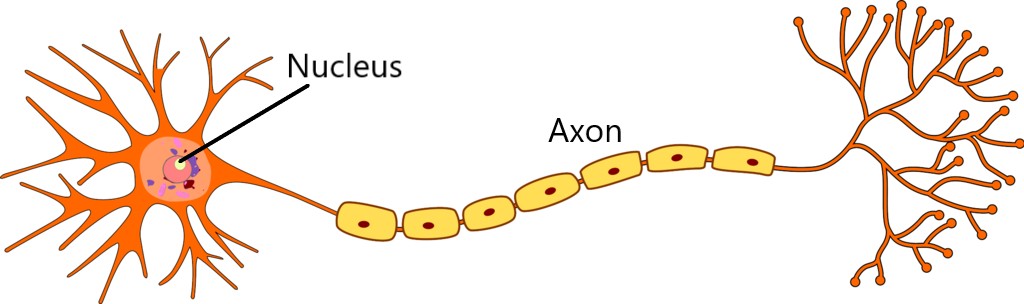
Image: Sanu N, via Wikimedia Commons
This surprising indifference of the nervous system to spinal cord injuries is common, especially if the injury involves axons that are far from the cell’s nuclei. Previous studies suggest that various genes respond differentially to damage that is far from the cell’s nuclei. But studies using the purification of mRNA being translated by ribosomes showed contradictory results.
So Ishwariya Venkatesh and Manojkumar Kumaran at CSIR-CCMB, Hyderabad collaborated with researchers in the US to investigate the problem using single-cell RNA sequencing. This method allowed them to see what was happening in the subpopulations of corticospinal neurons in mice with injuries induced in different parts of the spinal cord.
The researchers captured more than 3000 nuclei in emulsions of a gel bead to identify the differentially expressed genes in each. By examining individual cell nuclei, they could measure gene activity in extraordinary detail.
The researchers found that thoracic spinal injuries induced minimal changes in gene expression in corticospinal tract neurons. Cervical injuries, closer to the brain, triggered modest transcriptional changes in only a small subset of neurons. However, when the injury occurred within the brain itself, just one millimetre away from the neuron cell bodies, there was a dramatic activation of damage-responsive genes. Intracortical injury activated over 3,000 differentially expressed genes compared to just a few dozen in spinal injury contexts.

“In other words, the farther the injury is from the neuron’s nucleus, the less likely it is to trigger a full-scale repair response”, says Manojkumar Kumaran, CSIR-CCMB, Hyderabad.
After intracortical injury, the researchers found a core set of 145 upregulated genes that overlapped with responses seen in neurons that can regenerate, such as the dorsal root ganglia and retinal ganglion cells. The genes expressed differentially included key stress markers and regeneration-associated genes. Yet, most of these were absent in the response of corticospinal tract neurons to spinal injury.
This muted response suggests possibilities of therapeutic strategies. If we can find ways to stimulate these non-responsive corticospinal tract neurons far from the cortex, they may be able to kick-start regeneration processes.
“Our next challenge is to engineer an artificial distress signal using transcription factors. Transcription factors are master regulators that can trigger a growth response in these silent neurons”, says Ishwariya Venkatesh, CSIR-CCMB, Hyderabad.

As per WHO’s estimates in 2024, over 15 million people are living with spinal cord injury. And more people are being affected because of accidents. So, if the research strategy works, it could provide hope for treating paralysis and movement loss for millions of people globally.
Journal of Neuroscience, 45 (8) e1508242024 (2025)
DOI: 10.1523/JNEUROSCI.1508-24.2024;
Reported by Ragothaman M. Yennamalli,
SASTRA University, Chennai
STEAMindiaReports: free-to-use science news for Indian media
scienceandmediaworkshops
training researchers, scientists and science faculty to write well
targeting other scientists, decision makers, funding agencies
and educated public
 STEAMindiaReports
Leave a comment