A boon to cattle farmers
The sex of cattle influences the price for farmers. If more births of a specific sex are achieved – males for meat and females for milk – the meat and dairy industry would benefit.
In cattle, as in other mammals, the critical determinant of the sex of the offspring is the sperm. If the sperm fertilising the egg has an X-chromosome, the result is a female calf, and, if the sperm has a Y-chromosome, a male calf is born.
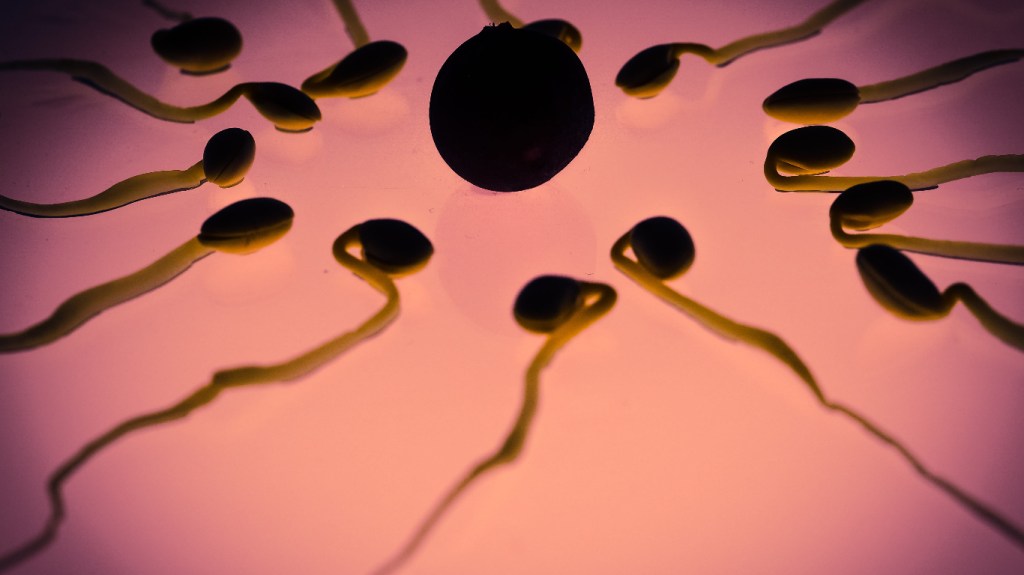
Image: pxfuel
The two types of sperms differ not only in their DNA content, but also in terms of their motility patterns, surface charges, and cell surface biochemistry. However, separating them based on these differences is cumbersome, and does not give consistent results.
A few years ago, Korean scientists developed a monoclonal antibody that recognizes cattle sperms with the Y-chromosome. This monoclonal antibody binds to sperms with the Y-chromosome and aggregates them, thus separating the two types of sperms. The Korean researchers investigated the efficacy of the monoclonal antibody to sort freeze-thawed sperms. The results were encouraging.
Recently, Mukesh Kumar Gupta from the National Institute of Technology, Rourkela, collaborated with the Korean researchers to test the effectiveness and efficiency of the monoclonal antibody in sorting fresh sperm. They collected sperm from three bulls and divided the fresh sperms from each bull into two equal parts. They used the monoclonal antibody to separate the sperms. Both parts were then frozen and stored under liquid nitrogen, as is the norm for sperm used in artificial insemination.
The team also collected cattle eggs from slaughterhouses. About a thousand eggs were then fertilised with the sorted sperms with only the X-chromosome and the unsorted sperm with both X and Y chromosomes. The researchers compared the number of embryos formed under in vitro conditions by the two kinds of sperms.
Though there was a notable reduction in the number of embryos formed by the sorted and freeze-thawed sperm, the number of embryos that developed were comparable to those developed from unsorted and freeze-thawed sperm. The sorted sperm produced more than 95 per cent female embryos, while female embryos from fertilisation with the unsorted sperm were less than 45 per cent.
Apart from the commercial appeal, the technology can also assist in increasing the population of local breeds of cattle. By selecting for female calves, the population of native breeds can be enhanced to reach sustainable numbers. The technology, however, has now to be tested under in vivo conditions.
Veterinary Research Communications Published online on 11 July 2023;
DOI: 10.1007/s11259-023-10160-8
Reported by Velu Mani Selvaraj
RVS Agricultural College, Thanjavur
*This report was written during the 4th online workshop on science writing organised by Current Science.
All reports in this site, except those in the archives, are free-to-use for Indian media houses.
 STEAMindiaReports
Leave a comment