Primary production in marine environments can be monitored by satellites using chlorophyll measurements. Satellites can thus give us clues about how ocean-atmosphere coupled phenomena such as the Indian Ocean Dipole and El Niño modulate sea surface temperatures in winter to influence ocean productivity over the Arabian Sea.
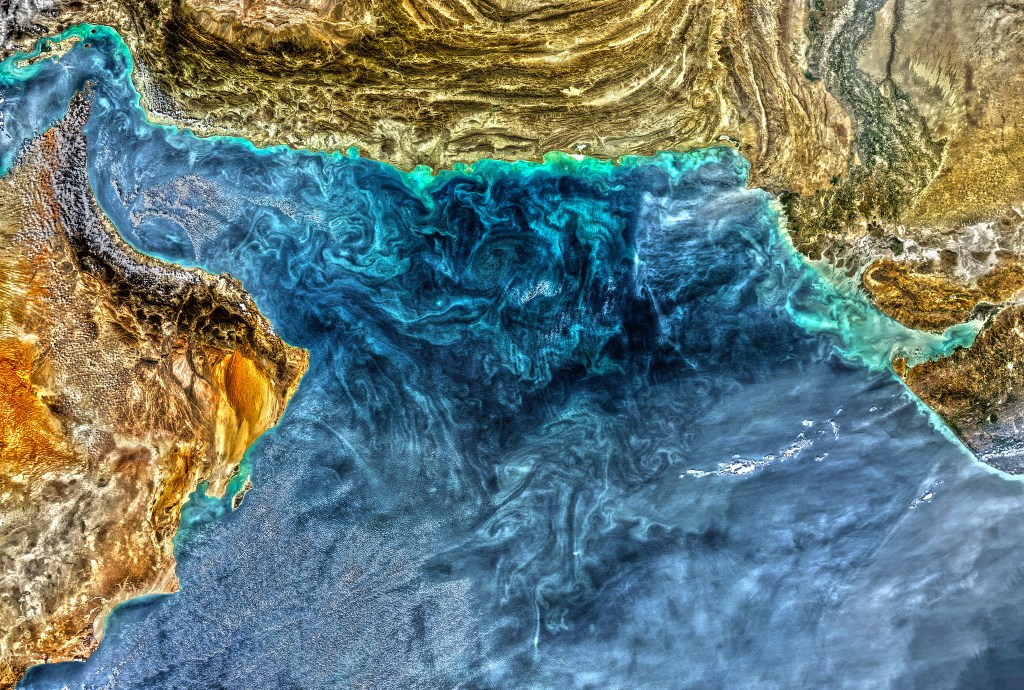
Image: Stuart Rankin via Flickr
Vivek Seelanki, Tanuja Nigam and Vimlesh Pant from IIT Delhi quantified chlorophyll-a concentrations in winter over the Arabian Sea. Using satellite data, they studied the individual and combined effects of the Indian Ocean Dipole and El-Niño from 2000 to 2018.
Based on the inter-annual variations of air-sea fluxes, they simulated chlorophyll and temperature variations over the Northern Arabian Sea. To do this, the group created a coupled physical and biogeochemical ocean model. To validate the computational model, they compared the satellite and in-situ observations with the simulations.
The coupled biophysical model had good agreement with surface and subsurface temperature observations. The model prediction of seasonal and annual variations of bloom and nutrient concentration also matched observational data.
Using the parameters in their model, the group explained the effects of the Indian Ocean Dipole and El-Niño.
When the Indian Ocean Dipole is active, strong north-easterly winds and higher net heat loss favour strong convective mixing. This leads to intensive cooling, weaker stratification, and strong vertical mixing, bringing nutrients up. This, in turn, leads to vigorous growth of algae, measured by high chlorophyll concentration.
When both the Indian Ocean Dipole and El-Niño are present, north-easterly winds weaken, and heat loss from the ocean reduces. This leads to surface warming and weakening of convective mixing. Stratification inhibits the transport of nutrients to the photic zone and algal growth, resulting in low chlorophyll concentrations.
The Arabian Sea marine ecosystem is located within a dynamic transition zone where the Indian Ocean Dipole and El-Niño can exert their influences. Changes in winds, heat fluxes, and mixing impact plankton communities. Plankton blooms tend to attract marine animals, secondary producers, and that, in turn, attracts predators. Thus, algal blooms have implications on the fisheries sector. So monitoring and modelling algal bloom provides data for sustainable practices and dynamic management, in which fishing is done based on plankton growth.
DOI: 10.1016/j.dsr.2022.103913;
Deep-Sea Research 190: 103913 (2022)
Manish Kumar Tekam
IIT Indore
 STEAMindiaReports
Leave a comment