Nanotechnology 
Fibre biosensor to diagnose cardiovascular disease
(0)The amount of the proteins, troponin T and troponin I, in blood is helpful to assess the damage done due to a heart attack. Troponin I is a better indicator. Researchers have now come up with a lab-on-a-chip device to detect the protein. Read the details of their ingenious invention.
Nitrogen Dioxide Sensors: high sensitivity, fast response
Zinc oxide can be used as a sensor for nitrogen dioxide, a harmful gas. Researchers at PSG Institute of Advanced Studies, Coimbatore find that a nanofiber of zinc oxide sheathed by a thin layer of another metal oxide can improve the sensitivity as never before. Vishal Baloria reports.
Converting Carbon Dioxide to Methanol
To keep carbon dioxide emissions under control, convert the green-house gas into methanol. To do this, there is a simple method developed recently by scientists at CSIR-NCL Pune and IIT Palakkad. Ajesh Zacchariah reports.

Tamarind and Jackfruit Seeds: Improving vegetable shelf life
R Santhosh and Preetam Sarkar from the National Institute of Technology Rourkela have come up with a recipe for making films to increase shelf life of vegetables and fruits. The ingredients: carbohydrates from jackfruit seeds, xyloglucan from tamarind seeds and zinc oxide nanoparticles. Read about the process here.

Transparent Metallic Electrodes: for flexible digital devices
Scientists from NIT Warangal, DMRL Hyderabad, SRM Institute of Science and Technology, and ARCI Hyderabad have now come out with a super thin, transparent and flexible metallic electrode for optoelectronics and wearable digital devices. Read the report here:
Mercury and Methylmercury: detect and discriminate
Mercury in the environment is dangerous to human health. Methyl mercury is even more so. Nilanjan Dey from BITS Pilani, Hyderabad has designed a cost effective and highly sensitive method to detect both.
Chitosan Properties: source matters
More than two decades ago, a team from CSIR-NCL started inquiring into the basic science of the felicity of fungi to shift forms between yeast and hyphae. Now they are homing in on applications. Here are the details of the first one.
Protecting Rubberwood Furniture: Bio-synthesized nanoparticles
Protecting furniture from fungal attacks, especially in monsoon, is a problem. It becomes more acute if the wood used is from the rubber tree. Scientists from the Institute of Wood Science and Technology now offer a solution.
Growing nitrogen-doped graphene quantum dots on carbon fabric
Nitrogen-doped graphene quantum dots have incredible photocatalytic and electrocatalytic properties. Scientists have now found a way to grow them on carbon fibre, for use in cleaning polluted water.
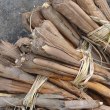
Hydrogen Fuel Cells: Palmyra sprouts biochar
S Ramaprabhu’s Alternative Energy & Nanotechnology Lab in IIT Madras reports a method to store hydrogen at room temperature. A step towards making vehicles running on hydrogen fuel.
 STEAMindiaReports