Environment 
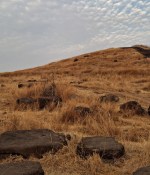
Savannas of Sahyadri: triangulating traditions and scientific disciplines
(0)Some people claim that the savannas in Maharashtra were once forests and that deforestation turned them into the existing grasslands. Researchers in IISER Pune counter this argument, using evidence from Marathi literature, paintings, ecology, climatology and the cultural traditions of the region. Yogita Karpate reports.

Water Resources in Jhelum Basin: planning for climate resilience
The Jhelum is a perennial river because of snow and glacier melt. If the climate changes as predicted by climate models, what will happen to the glaciers in the basin? What should we anticipate in terms of water resources? Researchers from Kashmir investigated recently. Sheikh Aneaus reports from Srinagar, Kashmir.
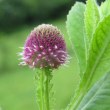
Eliminate mosquito larvae using East Indian Globe Thistle
Even a low concentration extract of the leaf of the East Indian Globe Thistle can kill mosquito larvae without impacting fish populations in water, say scientists from Loyola College, Chennai. They have identified the active compound, β-isocostic acid, and worked out how it acts. Dhatri Madduru reports:
Water Management in Banda: paving the way for drought prone districts
Researchers from the Indian Institute of Management Ranchi recently published a case study of managing water in Banda, which could be emulated and reproduced in drought-prone districts across the country. Nupur Sinha, BML Munjal University reports.
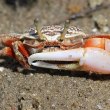
Crab diversity in the estuaries of Kerala
Researchers from the University of Kerala, recently reported spatial and temporal variations in mangrove crab diversity in five of the estuaries of Kerala. The fiddler crab, out of the thirteen species of the short tailed crabs, Austruca annulipes, was the most abundant species and Pseudosesarma glabrum was the rarest. Read more.

Potato Peels and Pea Pods
Cellulases, enzymes that break down cellulose, are in high demand. But the supply is limited. Indian researchers have now come up with new sources and cheap raw materials to produce cellulases at an industrial scale. K. Yashkamal reports.
Converting Carbon Dioxide to Methanol
To keep carbon dioxide emissions under control, convert the green-house gas into methanol. To do this, there is a simple method developed recently by scientists at CSIR-NCL Pune and IIT Palakkad. Ajesh Zacchariah reports.

Spotted Owlet: Biocontrol Agent in Agriculture
Researchers from the PJTSAU, Hyderabad investigated the dietary preferences of the spotted owlets in and around Rajendranagar. By analysing the pellets of indigestible food regurgitated by the owlet, the researchers demonstrate the value of the bird for farmers. Aparna Kalawate reports:
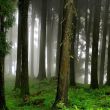
Strategic Action for Managing Forests in India
Forests are sources of livelihood for some, cleaner environment and a carbon sink for some others and a national pride for yet others. Yet forests are depleting and forest dweller, villagers nearby, forest officers and decision makers do not agree on how to manage forests. Recent research shows a logical way to manage forests sustainably.

Winter Productivity in the Arabian Sea
IIT Delhi has created a biophysical model to explain the influences of the Indian Ocean Dipole and El-Niño on the algal blooms in the Arabian sea. Simulations can now help predict algal bloom in the area – a boon for fishers to identify potential fishing sites.
 STEAMindiaReports